 English
 中文
 english

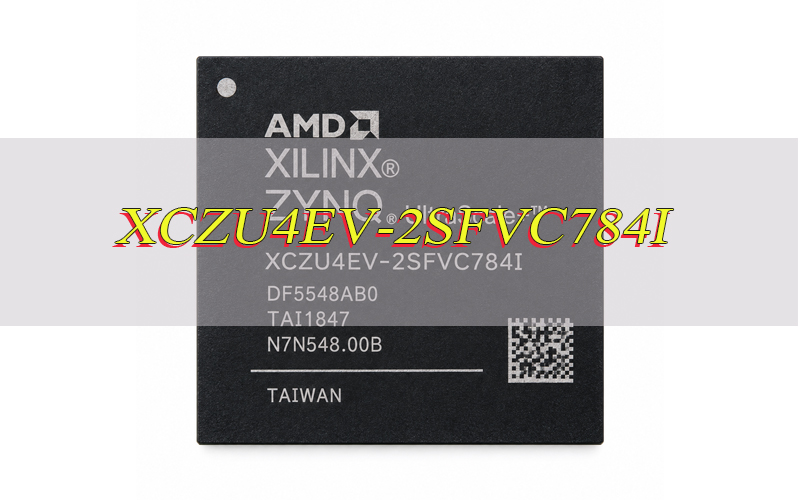
XCZU4EV-2SFVC784I is an AMD Zynq UltraScale+ MPSoC EV device that combines Arm processing, real-time control, programmable logic, DSP resources, and hardware video processing. The -2 speed grade, SFVC784 package, and I temperature grade define important differences in timing, available device resources, and operating conditions.
This guide explains what those specifications mean, what resources the device provides, where it fits, and what to check when comparing or sourcing a similar part.
What Is the XCZU4EV-2SFVC784I?
XCZU4EV-2SFVC784I belongs to the AMD Zynq UltraScale+ MPSoC EV family. It combines quad-core Arm Cortex-A53 application processors, dual-core Cortex-R5F real-time processors, programmable logic, DSP resources, graphics, and a dedicated H.264/H.265 Video Codec Unit.
| Code | Meaning | What It Defines |
|---|---|---|
| XCZU4EV | Base device | Processing, logic, DSP, and video resources |
| -2 | Speed grade | Timing and performance limits |
| SFVC784 | Package | Package format and available device resources |
| I | Temperature grade | Industrial operating-temperature range |
What Does the -2 Speed Grade Mean for XCZU4EV-2SFVC784I?
The -2 suffix is the speed grade of XCZU4EV-2SFVC784I. It does not represent the Cortex-A53 processor clock frequency. Instead, it identifies timing characteristics that apply to programmable logic, clocking resources, memory interfaces, and other timing-sensitive functions.
The difference becomes important when an application operates close to its timing or interface limits. Moving from a -2 device to another speed grade can affect timing margin and supported performance even when the XCZU4EV base device and SFVC784 package remain unchanged. If an implementation has already been validated with the -2 version, another speed grade should be checked against the same timing requirements before use.
What Does the SFVC784 Package Mean for XCZU4EV-2SFVC784I?
SFVC784 identifies the package configuration of XCZU4EV-2SFVC784I. It is a 784-ball BGA package with a 23 × 23 mm body size and 0.8 mm ball pitch. The package also determines which I/O and high-speed transceiver resources are available in this device configuration.
| SFVC784 Resource | XCZU4EV Configuration |
|---|---|
| Package balls | 784 |
| Package size | 23 × 23 mm |
| Ball pitch | 0.8 mm |
| HD I/O | 96 |
| HP I/O | 156 |
| GTH transceivers | 4 |
| GTY transceivers | 0 |
| PS-GTR transceivers | 4 |
The SFVC784 configuration exposes four GTH transceivers and no GTY transceivers. If your application depends on several high-speed serial channels or a large I/O count, these package-specific resources should be checked before selecting the device.
Other XCZU4EV packages may expose a different number of I/O or transceiver resources even when the base XCZU4EV device remains the same.
What Does the “I” Temperature Grade Mean for XCZU4EV-2SFVC784I?
The final I identifies the industrial temperature grade. XCZU4EV-2SFVC784I is specified for an industrial junction-temperature range of -40°C to +100°C.
This range is relevant to industrial control, embedded imaging, communications equipment, outdoor electronics, and other systems that operate under wider thermal conditions. The specification refers to junction temperature rather than ambient temperature, so actual device temperature still depends on workload, power consumption, cooling, and the surrounding environment.
If a product has already been qualified with the I-grade device, another temperature grade should meet the same environmental requirements before it is considered.
What Processing, Memory, and Interface Resources Does XCZU4EV-2SFVC784I Provide?
XCZU4EV-2SFVC784I combines several types of processing in one device, allowing software, real-time control, programmable acceleration, and video processing to handle different workloads.
| Resource | XCZU4EV Specification |
|---|---|
| Application processors | Quad-core Arm Cortex-A53 |
| Real-time processors | Dual-core Cortex-R5F |
| Graphics | Arm Mali-400 MP2 |
| System logic cells | About 192K |
| CLB LUTs | 87,840 |
| DSP slices | 728 |
| Block RAM | 4.5 Mb |
| UltraRAM | 13.5 Mb |
| Video Codec Unit | Integrated |
| Video support | H.264 / H.265 |
| Memory support | DDR4, LPDDR4, DDR3, DDR3L, LPDDR3 |
The Cortex-A53 processors are suited to operating systems and application software, while the Cortex-R5F cores can handle deterministic and real-time functions. Programmable logic and DSP resources can support parallel data processing, sensor processing, custom acceleration, and other application-specific workloads.
The EV designation adds dedicated H.264/H.265 video processing, allowing video encoding and decoding to be handled by dedicated hardware rather than relying entirely on general-purpose processors. The device also supports a broad range of communications, storage, and high-speed interfaces for systems that combine control with large data flows.
When Does XCZU4EV-2SFVC784I Make Sense for Your Application?
XCZU4EV-2SFVC784I is most useful when an application requires software processing, real-time control, programmable acceleration, and high-throughput data handling in the same chip.
- Embedded vision and video analytics: Programmable logic can accelerate image-processing pipelines while the integrated H.264/H.265 VCU handles video compression. This is useful when video capture, processing, and encoding must operate together.
- Industrial automation and robotics: Cortex-R5F cores can handle time-sensitive control while Cortex-A53 processors run higher-level software. DSP and programmable-logic resources can support sensor processing, filtering, motion algorithms, and parallel calculations.
- Edge processing: Local hardware acceleration can process image, sensor, or video data before it is sent elsewhere, reducing processor load, latency, and external data bandwidth.
- Multi-function embedded systems: The combination of processors, configurable logic, memory interfaces, and high-speed connectivity can reduce the need for separate processing and acceleration devices.
Selection should still be based on actual resource requirements. Check whether the logic capacity, 728 DSP slices, available memory, four GTH transceivers, I/O resources, and VCU capability provide enough margin for the intended workload.
Can a Similar XCZU4EV Part Replace XCZU4EV-2SFVC784I?
A similar XCZU4EV part may work as an alternative, but compatibility depends on which part of the ordering code changes.
| Similar Part | Main Difference | What to Review |
|---|---|---|
| XCZU4EV-1SFVC784I | Speed grade | Timing and interface performance |
| XCZU4EV-2SFVC784E | Temperature grade | Qualified operating range |
| XCZU4EV-2FBVB900I | Package | I/O and transceiver resources |
| XCZU5EV-2SFVC784I | Base device | Logic, DSP, memory, power, and implementation |
For a replacement review, focus on five areas:
- Speed and temperature: Confirm that the alternative meets the required timing performance and operating-temperature range.
- Package resources: Compare I/O, GTH, PS-GTR, and other package-dependent resources.
- Logic and DSP capacity: Make sure the alternative provides enough programmable logic, memory, and DSP resources for the existing implementation.
- Power and thermal requirements: A different device can change power consumption and cooling requirements.
- Implementation compatibility: Confirm device selection, configuration, software support, and development-tool settings before approving the change.
A similar model should be treated as a possible alternative rather than an automatic equivalent.
What Should You Check Before Buying XCZU4EV-2SFVC784I?
Once XCZU4EV-2SFVC784I has been confirmed as the required chip, make sure the parts being offered match the exact specification and batch requirements of your project.
Check:
- Full part number: Confirm XCZU4EV-2SFVC784I rather than a shortened XCZU4EV description.
- Quantity and lot structure: Check whether the required quantity comes from one lot or multiple lots.
- date code and lot code: Confirm any restrictions before ordering.
- Packaging condition: Check labels, packing format, seal condition, and moisture protection where applicable.
- Traceability: Confirm which sourcing, inspection, packing, and shipment records are available.
- Testing: For higher-risk supply, consider visual inspection, X-ray, De-Cap, or functional testing according to the project’s quality requirements.
If the -2 speed grade, SFVC784 package, and I temperature grade cannot change, specify no substitution.
The quoted quantity, complete part number, date code, lot code, packaging, and inspection records should correspond to the batch you are actually receiving.
Why Choose Melson Components for XCZU4EV-2SFVC784I?
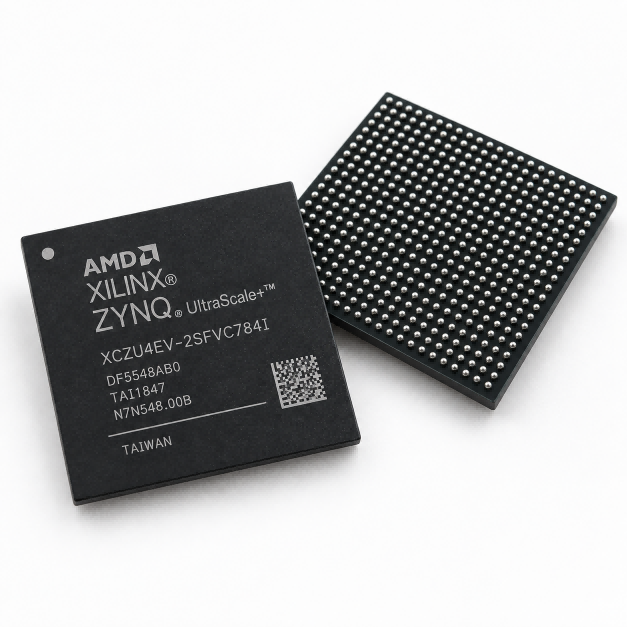
If you are sourcing XCZU4EV-2SFVC784I, availability is only one part of the decision. For a high-value MPSoC, you may also need to confirm the batch condition, reduce supply risk, and keep enough records for future quality review.
- Free BOM Health Check: We can help review EOL, LTB, lead-time, and availability risks across your BOM, so you can identify supply issues before they affect production.
- X-Ray Verified Inspection: If the project requires additional verification, visual inspection, X-ray, De-Cap, and functional testing can be arranged for the offered batch.
- 15-Year Traceability Records: RFQ, sourcing, inspection, packing, and shipment records can be kept for up to 15 years, which is useful for repeat orders, quality audits, and long-lifecycle programs.
- EOL & Alternative Support: If XCZU4EV-2SFVC784I becomes difficult to source, we can help check available obsolete stock and possible alternatives based on your actual requirements instead of simply suggesting a similar part number.
For XCZU4EV-2SFVC784I, send your quantity, date code requirement, delivery location, and any inspection or testing requirements to sales@melsonchip.com.
FAQs About XCZU4EV-2SFVC784I
Q1: Is XCZU4EV-2SFVC784I still an active device?
A1: Check the latest AMD lifecycle information when placing an order. Product lifecycle status and current market availability are separate issues.
Q2: Does XCZU4EV-2SFVC784I support secure boot?
A2: Zynq UltraScale+ MPSoC devices support authenticated and encrypted boot flows. The final configuration depends on the security architecture used in the system.
Q3: Can Linux run on XCZU4EV-2SFVC784I?
A3: Yes. Linux can run on the Cortex-A53 application processors, while Cortex-R5F processors can be used for separate real-time workloads.
Q4: Does XCZU4EV-2SFVC784I support ECC?
A4: ECC is available for several memory resources in the Zynq UltraScale+ architecture. The exact coverage depends on the memory type and configuration.
Q5: Can the VCU encode and decode video at the same time?
A5: The VCU supports hardware H.264/H.265 encoding and decoding. Actual throughput depends on resolution, frame rate, codec settings, and memory bandwidth.
Q6: Is an external GPU required with XCZU4EV-2SFVC784I?
A6: Not for every application. XCZU4EV includes a Mali-400 MP2 GPU, but applications with substantially higher graphics requirements may need additional processing resources.
Q7: Which boot devices can XCZU4EV-2SFVC784I use?
A7: Zynq UltraScale+ MPSoC supports several boot and storage options, including QSPI, NAND, and eMMC configurations.
Q8: Can XCZU4EV-2SFVC784I be used for AI inference?
A8: Its programmable logic and DSP resources can accelerate suitable inference workloads, although it does not include the dedicated AI Engines found in newer AMD adaptive SoC families.
Q9: Does XCZU4EV-2SFVC784I require a specific Vivado version?
A9: Device and IP support depend on the Vivado release. Check compatibility before opening an older project or starting a new design.
Q10: Does XCZU4EV-2SFVC784I support PCIe?
A10: Yes. Zynq UltraScale+ MPSoC devices support PCIe through their available high-speed transceiver resources. The supported PCIe configuration depends on the exact device, package, speed grade, and transceiver resources available in the selected part.
Conclusion
XCZU4EV-2SFVC784I combines the ZU4EV MPSoC architecture with a -2 speed grade, SFVC784 package, and industrial temperature grade. These specifications determine timing characteristics, available device resources, and qualified operating conditions, so the full ordering code should be checked when selecting or replacing the chip.
If you are sourcing XCZU4EV-2SFVC784I, send your quantity, date code requirement, delivery location, and inspection or testing requirements to sales@melsonchip.com.