 English
 中文
中文  english
A robotics project can move smoothly from prototype to pilot production until one important component suddenly becomes unavailable. It may be an MCU on the control board, a motor driver IC on the servo control module, a sensor used for positioning, or a connector used between the battery and motion system. Once that part becomes hard to source, the whole production plan may slow down.
For robotics manufacturers, Robotics component alternatives are not just about finding another part with a similar description. A suitable alternative must match the electrical parameters, package, pinout, firmware requirements, mechanical structure, lifecycle status, and long term supply plan. If the replacement is selected too quickly, it may create extra engineering work, quality risk, or production delay.
Why Do Robotics Projects Need Reliable Component Alternatives?
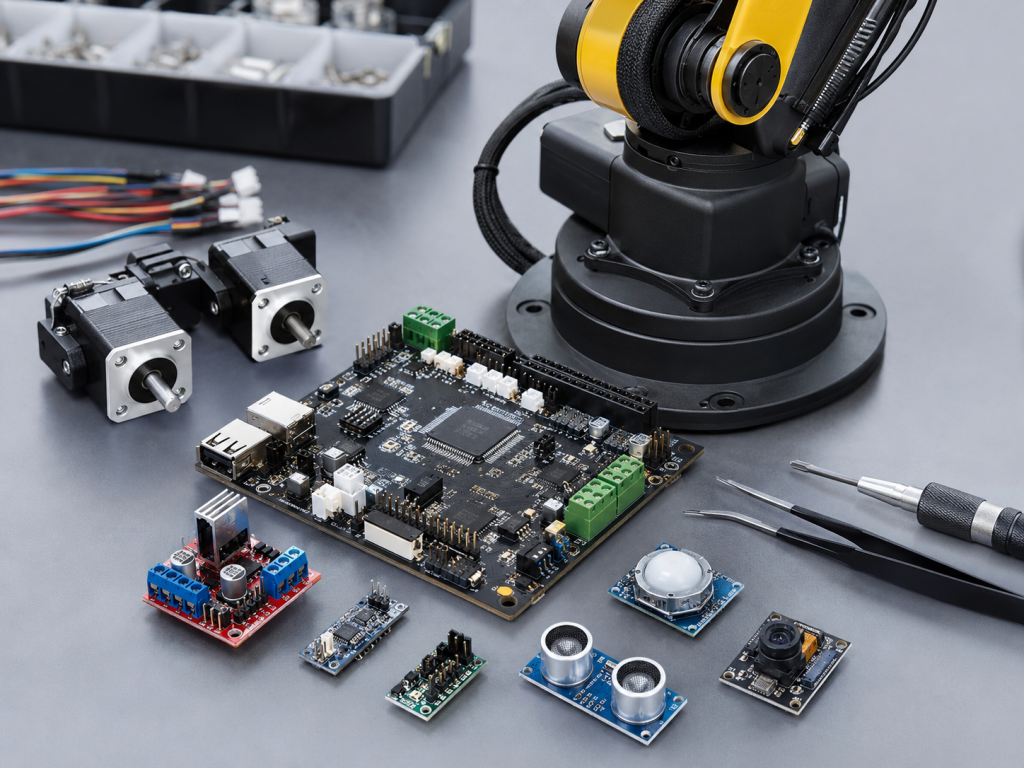
Robotics products usually combine control, sensing, motion, power, communication, and safety circuits. These systems are closely connected. When one component becomes unavailable, the impact may spread to several parts of the product.
Reliable component alternatives are important because robotics projects often require:
- Stable motion control
- Accurate sensor feedback
- Long lifecycle support
- Consistent batch quality
- Strong power conversion performance
- Reliable communication between modules
- Durable connectors and interfaces
- Continued supply from prototype to mass production
For example, a small change in a motor driver IC may affect current control, heat dissipation, or motor response. A sensor replacement may require recalibration. An MCU alternative may need firmware adjustment. A connector change may influence mechanical assembly or vibration resistance.
That is why robotics component alternatives should be handled as an engineering and supply chain task, not only a purchasing task. The goal is to keep the robot working reliably while also improving material availability and future supply stability.
What Components Commonly Need Alternatives in Robotics Electronics?
Many components in robotics electronics can face shortage, EOL, long lead time, or cost fluctuation. Some parts are easy to replace, while others need careful engineering review.
| Component Type | Common Use in Robotics | Alternative Risk |
|---|---|---|
| MCU / Processor | Main control board, motion control | Firmware compatibility, pinout, lifecycle |
| Motor Driver IC | Servo, stepper, BLDC motor control | Current rating, heat, control mode |
| MOSFET / IGBT | Power switching, motor drive | Rds(on), voltage, current, thermal performance |
| Sensor | Position, distance, force, IMU, vision | Accuracy, interface, calibration |
| Encoder Component | Motor feedback, positioning | Resolution, signal type, mechanical fit |
| DC DC Converter | Power conversion | Efficiency, EMI, layout requirement |
| Connector | Motor, battery, signal, sensor interface | Pitch, mating part, vibration resistance |
| Communication IC | CAN, RS485, Ethernet, wireless module | Protocol, ESD level, isolation requirement |
| Memory IC | Program storage, data logging | Voltage, package, speed |
| Protection Device | ESD, surge, reverse polarity protection | Clamping voltage, response time |
Among these categories, MCU, motor driver IC, sensor, encoder, communication IC, and power components usually require more detailed review. They directly affect control accuracy, response speed, heat management, and system stability.
What Causes Component Replacement Needs in Robotics Projects?
Robotics companies may need component alternatives for many reasons. In some cases, the original component is still active but has a long lead time. In other cases, the part is already EOL or difficult to source from reliable channels.
Common reasons include:
- Component shortage
The original part is out of stock or only available from limited sources. - Long lead time
The original factory lead time may be 20, 30, or even more weeks. - EOL or NRND status
The manufacturer may mark the part as End of Life or Not Recommended for New Design. - Price increase
Some parts may become too expensive during market shortage. - Single source risk
The BOM depends on one brand or one supplier, which increases supply uncertainty. - Incomplete BOM information
Some BOMs only include values or specifications without exact MPNs. - Prototype to production transition
A component used during prototype may not be suitable for stable mass production. - Performance upgrade
A robot may need better sensing accuracy, higher current capacity, or stronger communication performance.
A good replacement plan should begin during BOM review, not after the production line is already waiting for missing parts.
How Should Robotics Component Alternatives Be Evaluated?
A suitable alternative should be reviewed from both technical and supply chain angles. It is not enough to compare only one or two parameters. For robotics applications, the replacement part must work in the real system.
| Evaluation Item | Why It Matters in Robotics |
|---|---|
| Pinout | Prevents circuit mismatch |
| Package | Avoids PCB layout changes |
| Firmware compatibility | Critical for MCU and control ICs |
| Accuracy | Important for sensors and encoders |
| Thermal performance | Affects motor drive and power systems |
| Interface | Ensures communication with the control board |
| Lifecycle status | Supports long term production |
| Supply stability | Reduces future shortage risk |
| Mechanical fit | Important for connectors and modules |
| Test requirement | Confirms real application performance |
Before approving a robotics component alternative, engineers and sourcing teams should check:
- Datasheet comparison
- Package and footprint
- Pin configuration
- Electrical rating
- Operating temperature
- Communication protocol
- Software or firmware impact
- Thermal performance
- EMC and ESD behavior
- Supplier source
- Date code and traceability
- Long term availability
This review helps avoid replacement decisions that solve one shortage but create another production issue later.
What Are the Main Types of Component Alternatives for Robotics?
Robotics component alternatives can be divided into several types. Each type has a different approval difficulty.
1. Drop In Alternatives
Drop in alternatives are the easiest to approve. They usually have the same package, pinout, and main electrical parameters. They are often used for:
- Resistors
- Capacitors
- Diodes
- TVS devices
- Some crystals
- Some connectors
- Selected MOSFETs
Even for drop in parts, the team should still check tolerance, temperature rating, voltage rating, and supplier reliability.
2. Same Series Alternatives
Same series alternatives are often used for MCU, memory, and power ICs. For example, an MCU from the same family may have more Flash, less RAM, or a different temperature grade. This can reduce firmware migration difficulty.
However, the team still needs to confirm:
- Pin compatibility
- Peripheral interface
- Memory size
- Clock configuration
- Development tool support
- Firmware changes
3. Cross Brand Alternatives
Cross brand alternatives come from another manufacturer. They are useful when the original brand has long lead time or unstable supply. This approach is common for MOSFETs, power ICs, connectors, sensors, and communication ICs.
A cross reference table can be helpful, but it should not replace datasheet review. The final decision should be based on real parameter comparison and application testing.
4. Redesign Based Alternatives
When a part is obsolete or impossible to source in stable quantity, redesign may be the best option. This may involve:
- PCB layout adjustment
- Firmware modification
- Peripheral circuit changes
- Mechanical structure update
- New test validation
For robotics projects with long lifecycle requirements, redesign based alternatives can help build a more stable supply chain for future production.
How to Handle MCU and Processor Alternatives in Robotics Control Boards?
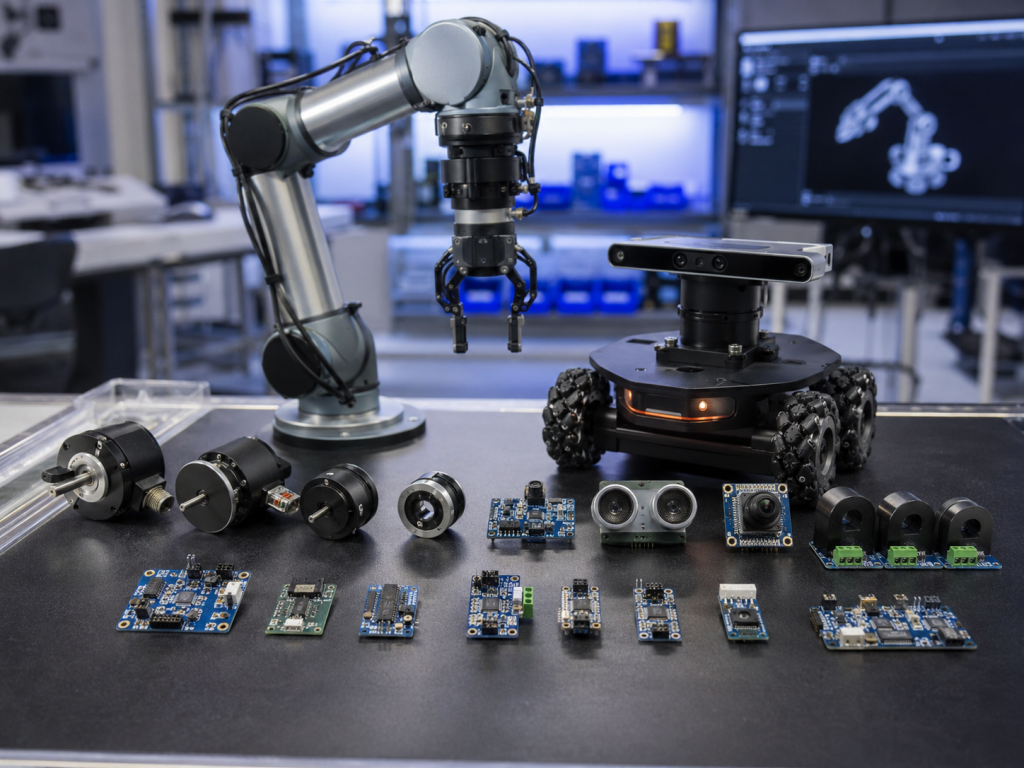
MCU and processor alternatives are among the most sensitive replacement tasks in robotics electronics. The MCU may control motion, sensor data, safety logic, communication, and user interface functions.
When reviewing MCU alternatives, the following items should be checked carefully:
- Core architecture
- Flash and RAM size
- Package
- Pin compatibility
- GPIO quantity
- ADC channels
- PWM resources
- Timer functions
- CAN, RS485, Ethernet, SPI, I2C, UART, or USB interfaces
- Clock system
- Operating voltage
- Temperature range
- Firmware migration effort
- Development tool compatibility
If possible, same series replacement should be checked first. This may reduce software changes and shorten validation time.
For robotics control boards, MCU replacement should always involve engineering confirmation. Purchasing can help find availability, but firmware compatibility and system performance must be reviewed by engineers.
How to Choose Alternatives for Motor Drivers, MOSFETs, and Power ICs?
Motion control and power systems are central to robotics performance. Motor drivers, MOSFETs, IGBTs, DC DC converters, LDOs, and gate drivers must be selected carefully.
For motor driver IC alternatives, check:
- Motor type support
- Control mode
- Output current
- Peak current
- Protection functions
- Package
- Heat dissipation
- Input logic level
- PWM control
- Fault feedback
For MOSFET and IGBT alternatives, check:
- Voltage rating
- Current rating
- Rds(on)
- Gate charge
- Switching speed
- Thermal resistance
- Package
- Power loss
- Availability from stable channels
For power IC alternatives, check:
- Input voltage range
- Output voltage
- Output current
- Efficiency
- Switching frequency
- EMI behavior
- Compensation requirement
- Layout sensitivity
A small difference in power components can affect heat, battery life, motor torque, and long term reliability. Therefore, power related alternatives should go through careful testing before approval.
How to Evaluate Sensor and Encoder Alternatives for Robotics?
Sensors and encoders help robots understand position, motion, force, distance, speed, and the surrounding environment. A replacement part may have similar basic specifications but different real world behavior.
Sensor and encoder alternatives should be reviewed for:
- Accuracy
- Resolution
- Response time
- Measurement range
- Interface type
- Output format
- Calibration method
- Noise level
- Temperature drift
- Mechanical mounting
- Software driver support
- Long term supply
Common robotics sensors include:
- IMU
- Hall sensor
- Current sensor
- Force sensor
- Pressure sensor
- Distance sensor
- Optical sensor
- Encoder
- Camera module
- LiDAR related components
For example, if an encoder replacement has a different resolution or signal output, the control system may need parameter changes. If an IMU has different noise characteristics, the motion algorithm may need adjustment. So, sensor alternatives should be tested in the real robot environment whenever possible.
How Can BOM Review Prevent Replacement Risks Before Production?
BOM review is one of the most effective ways to reduce replacement risk before production starts. It helps identify which components may create shortage, EOL, cost, or quality problems.
In robotics projects, BOM review can find:
- Single source components
- Long lead time parts
- EOL or NRND parts
- Uncommon packages
- Components with no clear alternatives
- Parts with price fluctuation
- Incomplete BOM descriptions
- High risk sourcing channels
A practical BOM risk classification may look like this:
- Low Risk: standard resistors, capacitors, common diodes, general TVS devices.
- Medium Risk: connectors, crystals, DC DC converters, protection ICs, power components.
- High Risk: MCU, processor, motor driver IC, sensor, encoder, communication IC, memory IC.
After classification, the team can prepare alternatives for the high risk components first. This saves time and helps protect the production schedule.
Case Study: Alternative Component Support for a Robotics Customer
Customer Background
A robotics customer was developing an AMR control system for warehouse automation. The product included:
- Main control board
- Motor driver board
- Sensor interface board
- Battery and power management board
- Communication module
- Around 280 line items in the BOM
The customer planned to build a pilot run of 300 sets before moving to regular production.
Challenge
During procurement, several risks appeared:
- One MCU had a factory lead time of 26 weeks.
- One motor driver IC was difficult to source from regular channels.
- Two connectors had unstable supply and different date code batches.
- Several MOSFETs had price increases and limited inventory.
If no solution was found, the pilot run could be delayed by about 6 weeks.
Our Solution
Our team reviewed the full BOM and separated the parts into low, medium, and high risk groups. We identified 12 high risk components, including MCU, motor driver IC, MOSFETs, connectors, and communication parts.
For the MCU, we searched same series alternatives first and compared:
- Flash and RAM
- Pinout
- Package
- Peripheral interfaces
- Operating voltage
- Development tool support
- Stock and lead time
For the motor driver IC, we prepared functional alternatives and compared:
- Current rating
- Control mode
- Protection features
- Thermal performance
- Package
- Application circuit requirements
For the connectors, we checked mechanical compatibility, pitch, mating parts, current rating, and vibration resistance. For MOSFETs, we compared voltage rating, Rds(on), gate charge, package, and thermal performance.
We also reviewed supplier sources and arranged inspection for selected high risk ICs.
Result and Customer Satisfaction
The customer received samples within 9 working days. After engineering validation, three alternative parts were approved for backup use.
The project achieved these results:
- 12 high risk components were identified before pilot production.
- 5 alternative parts were recommended.
- 3 alternatives passed customer validation.
- Pilot run delay was reduced from an estimated 6 weeks to about 10 days.
- The customer completed the 300 set pilot run with no main PCB layout change.
- A backup BOM was prepared for the next production batch.
The customer was satisfied because the solution solved the urgent shortage and also improved future supply planning.
How Do We Reduce Counterfeit and Quality Risk During Replacement Sourcing?
During shortage periods, sourcing from the open market may create counterfeit and quality risk. This is especially important for robotics products used in industrial automation, logistics, medical support, or safety related environments.
Risk control should include:
- Supplier qualification
- Source review
- Label and packaging inspection
- Date code checking
- Visual inspection
- X Ray inspection
- De Cap inspection when needed
- Functional testing
- Traceability record
For high risk parts such as MCU, motor driver IC, sensor, communication IC, and memory, inspection can help reduce the chance of using unreliable components. Clear traceability from RFQ to shipment also helps customers manage future quality review.

Why Choose Us for Robotics Component Alternatives?
For robotics projects, we do not simply search for a similar part. We review the application position, compare technical parameters, check lifecycle status, verify supplier source, and support engineering validation from prototype to production.
Our support includes:
- BOM health analysis
- EOL and NRND checking
- Shortage component sourcing
- Alternative component recommendation
- Same series replacement screening
- Cross reference comparison
- Qualified supplier sourcing
- Quality inspection
- X Ray and De Cap inspection
- Functional testing
- Traceability management
- Prototype and mass production support
Whether your project involves AMR, AGV, industrial robots, service robots, collaborative robots, or inspection robots, our team can help review high risk components and provide reliable alternative sourcing support.
FAQs
Q1: Can a robotics MCU be replaced by another model from the same series?
Yes, but Flash, RAM, package, pinout, peripheral interfaces, voltage, development tools, and firmware migration must be checked before approval.
Q2: What should be checked before replacing a motor driver IC?
Voltage rating, current rating, control mode, protection functions, thermal performance, package, application circuit, and EMI behavior should be reviewed.
Q3: Are sensor alternatives safe for robotics applications?
They can be used after proper review and testing. Accuracy, response time, interface, calibration method, noise level, and software support should be confirmed.
Q4: Can you help if our BOM has only specifications but no MPN?
Yes. We can review the specification, package, value, application position, and BOM context to recommend candidate models or suitable component series.
Q5: How do you reduce risk when sourcing obsolete robotics components?
We check lifecycle status, stock source, traceability, inspection requirements, possible alternatives, and long term supply options.
Q6: Can alternative components support mass production?
Yes, if they pass engineering validation and have stable supply, batch consistency, quality traceability, and approved supplier support.
Call to Action
Need help with robotics component alternatives? Send us your robotics BOM, target quantity, preferred brands, and delivery requirements. Our team can help review high risk components, check EOL and shortage status, recommend suitable alternatives, and support reliable sourcing from prototype to mass production.