 English
 中文
中文  english

In automotive electronics, component sourcing is not only about availability. It is about lifecycle stability, batch consistency, verified channels, and production continuity. For applications such as BMS, automotive lighting control, vehicle communication, sensor modules, charging systems, and control units, an unstable component supply can quickly become a production risk.
Melson works as an early-warning system for component risk, helping customers with BOM sourcing, shortage recovery, alternative part support, channel verification, inspection, and traceability record management before problems reach the production line.
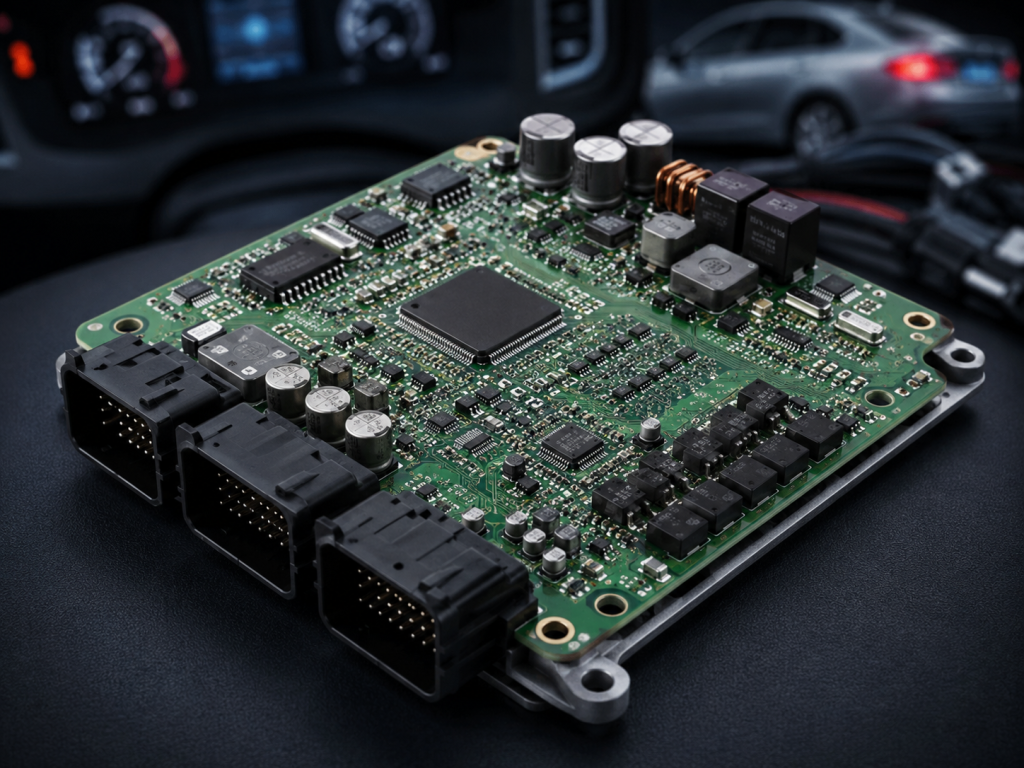
Why Automotive Electronics Needs Careful Component Sourcing?
Automotive electronics often operates in demanding environments. Components may need to support temperature fluctuation, vibration, voltage variation, long service life, and stable batch performance. Even when a component looks ordinary, its sourcing history, date code, packaging condition, and lot consistency can be important for production control.
For automotive electronics manufacturers, common sourcing concerns include:
- Long lead time components
- Sudden shortage in production BOMs
- EOL or obsolete components
- Unstable pricing from open market channels
- Counterfeit or mixed-lot risk
- Date code and lot code inconsistency
- Alternative part verification
- Urgent small-batch procurement
- Need for inspection records before shipment
In many projects, the customer already has a qualified BOM. The real challenge is not the design itself, but keeping that BOM supplied during prototype builds, mass production, after-sales production, or repeated batch orders.
Common Automotive Electronic Components We Source
Automotive electronics uses a wide range of electronic components. Some are standard, while others may require controlled sourcing, original packaging, batch stability, or special inspection.
| Component Type | Common Applications |
| MCU and Logic ICs | Control modules, sensor boards, lighting control, BMS control |
| Power Management ICs | DC-DC conversion, voltage regulation, charging modules |
| MOSFET and IGBT | Motor control, power switching, LED drivers, battery systems |
| MLCC, Resistors, Inductors | Filtering, signal conditioning, power stability |
| Connectors | Wire harness, board-to-board connection, power interface |
| Relays | Switching, circuit protection, control circuits |
| Sensors | Temperature, pressure, current, position, motion detection |
| Protection Devices | TVS diodes, fuses, varistors, ESD protection |
| Memory ICs | Infotainment, telematics, control modules |
| RF Components | Telematics, GPS, wireless communication modules |
Automotive Applications We Support
Melson supports sourcing needs for different automotive electronics applications, including:
- Battery Management Systems
- Automotive LED Lighting
- EV Charging Modules
- Telematics Control Units
- Infotainment Systems
- Sensor Control Modules
- Motor Control Units
- Power Distribution Modules
- Vehicle Communication Modules
- Aftermarket Automotive Electronics
Each application has different sourcing priorities. For example, a BMS project may focus on MCU availability, while automotive LED lighting project may care more about LED drivers. This is why Melson does not treat every BOM in the same way. Our sourcing team reviews part type, application background, urgency, quality requirements, and customer procurement expectations before offering sourcing feedback.
Typical Electronic Component Sourcing Cases for Automotives
Case 1: BMS MCU Shortage — Lead Time Reduced from 16 Weeks to 4 Weeks
Customer Challenge
An automotive BMS customer was preparing for a pilot production build, but the original MCU on the approved BOM suddenly became difficult to source. The standard lead time from regular channels was extended to around 16 weeks, while the customer needed components within 4–5 weeks to keep the project moving.
The main risk was not only delayed delivery. If the MCU could not be secured in time, the customer’s firmware validation, PCBA assembly schedule, and pilot production plan would all be pushed back.
Melson’s Solution
Melson reviewed the original MCU specification, including package type, memory size, operating voltage, I/O quantity, communication interfaces, temperature grade, and lifecycle status. Within 48 hours, Melson provided the customer with:
- Available stock options from verified channels
- Date code and lot information
- Lead time comparison
- Price comparison
- 2 possible alternative MCU options for engineering review
For the original MCU, Melson identified traceable stock that could support the customer’s immediate pilot build. At the same time, the alternative options gave the customer’s engineering team a backup plan for future production.
Measurable Result
Melson helped reduce the sourcing lead time from approximately 16 weeks to 4 weeks, helping the customer save nearly 12 weeks in the project schedule. The customer was able to continue firmware validation and PCBA pilot production without changing the original launch plan.
Case 2: Automotive LED Lighting Project — MOSFET and LED Driver Sourcing Cost Reduced by 12%
Customer Challenge
A PCBA manufacturer working on an automotive LED lighting control board needed MOSFETs, LED driver ICs, capacitors, and connectors for a small production batch. The original BOM was technically approved, but several components had unstable market pricing and inconsistent delivery dates.
One urgent spot quote was available, but the price was significantly higher than the customer’s target budget. The customer needed a faster and more balanced sourcing plan without sacrificing quality inspection.
Melson’s Solution
Melson divided the BOM into high-risk and low-risk items. MOSFETs and LED driver ICs were reviewed first because they directly affected power switching, current control, and thermal performance.
Melson compared sourcing options based on:
- Voltage and current rating
- Rds(on)
- Package compatibility
- Thermal performance
- Brand acceptance
- Available quantity
- Date code
- Lead time
- Inspection requirements
For several high-cost items, Melson checked multiple AVL and verified supplier channels instead of relying on a single urgent quote. After comparison, Melson helped the customer select components with better pricing, acceptable date codes, and shorter delivery.
Measurable Result
Melson helped the customer reduce the sourcing cost by approximately 12% compared with the first urgent spot quote. The required components were secured within 7 working days, helping the customer keep the LED lighting PCBA build on schedule.
Before shipment, Melson also performed 100% label, packaging, quantity, and date code inspection for the selected components.
Case 3: EOL Automotive Control Board Components — 6-Month Maintenance Supply Secured
Customer Challenge
An automotive control board customer needed several EOL components for after-sales maintenance and small-batch repair production. The original ICs were no longer easy to purchase through standard channels, and some available market stock had unclear origin, old date codes, or incomplete packaging information.
The customer wanted to avoid a forced redesign because the product was already in field service. However, using risky sources could create quality problems during repair or replacement.
Melson’s Solution
Melson first checked the lifecycle status of the original parts and separated the BOM into three categories:
- Parts still available from traceable channels
- Parts available only from limited market stock
- Parts requiring alternative evaluation
For higher-risk items, Melson recommended additional inspection before shipment, including visual inspection, label verification, packaging comparison, X-Ray inspection, and De-Cap inspection when necessary.
Melson also helped the customer compare last-time-buy options and short-term sourcing plans, so the customer could decide whether to secure enough stock for maintenance demand.
Measurable Result
Melson helped the customer secure enough critical components to support approximately 6 months of maintenance and small-batch repair demand. Compared with a redesign path, the customer avoided several weeks of engineering revalidation and reduced immediate project cost pressure.
The selected components went through enhanced inspection before shipment, including 100% external visual inspection, label verification, and date code review.
How Melson Supports Automotive Electronics Manufacturers?
Melson supports automotive electronics manufacturers with reliable component sourcing, BOM risk review, alternative part support, quality inspection, traceability, and flexible delivery solutions. For automotive-related projects, our goal is to help customers reduce sourcing risk before it affects production.
- In-House Test Lab
Melson has an in-house test lab for fast and strict incoming inspection, including X-Ray inspection, De-Cap analysis, functional testing, label checking, packaging review, and date code verification.
- 15-Year Full Traceability Record
Melson keeps end-to-end sourcing records from RFQ to shipment, including supplier information, purchasing records, inspection details, packaging records, and shipping files. Records can be retained for up to 15 years, while shipment videos are stored for more than 1 year.
- Supply Chain Safety and Reliability
Melson works with more than 1,000 qualified AVL suppliers, including Arrow, Avnet, Future, Digi-Key, Mouser, and RS. With over 10 million components in its own inventory, Melson can support urgent sourcing, shortage recovery, and stable supply for automotive electronics customers.
- BOM Health Analysis
Melson helps customers analyze BOM health before sourcing risks interrupt production, including EOL status, last-time-buy risk, ECN updates, authorized distributor stock, market shortage conditions, and lifecycle alignment with the customer’s automotive electronics project.
- Engineering Alternative Support
When original components are unavailable, costly, or close to EOL, Melson can help search for possible equivalent alternatives based on package, electrical parameters, lifecycle status, and supply availability.
- Obsolete and EOL Parts Sourcing
Melson supports sourcing for hard-to-find, obsolete, EOL, and last-buy components through global supplier resources.
- PCBA Design-In Support
For selected projects, Melson can support PCBA design-in services from schematic design to PCB layout.
- Payment Support
For qualified customers, Melson can provide flexible payment terms such as Net 15, Net 30, Net 45, and Net 60 days.
Why Quality Inspection Matters in Automotive Component Sourcing?
Automotive electronics customers often need stronger confidence before components enter production. Even when a part number is correct, there can still be concerns around source, storage condition, date code, packaging, and batch consistency.
Quality inspection helps customers reduce avoidable procurement risk. It also gives purchasing, engineering, and quality teams more information before components move into assembly.
Melson’s inspection support may include:
- Part number verification
- Manufacturer logo and marking check
- Label and packaging inspection
- Quantity confirmation
- Date code and lot code review
- X-Ray inspection
- De-Cap inspection
- Functional test support
- Inspection photo records
- Traceability file retention
For automotive electronics, these steps can be especially helpful when sourcing from non-standard channels, dealing with EOL parts, handling urgent shortages, or purchasing high-value semiconductors.
How to Start an Automotive Component Sourcing Project with Melson?
Working with Melson is simple, customers can send a BOM, part number list, or urgent sourcing request. The more details provided at the beginning, the faster the sourcing team can review the requirement.
A typical process includes:
- Send Part Number or Upload BOM
Customers provide part numbers, quantities, target delivery time, approved brands, and quality requirements.
- Check Availability and Sourcing Channels
Melson reviews available sources, lead times, pricing, date code, and supplier reliability.
- Review Alternatives When Needed
If the original part is unavailable or risky, Melson can help suggest possible alternatives for customer engineering review.
- Confirm Quality Requirements
Inspection methods can be selected based on part type, sourcing channel, project risk, and customer requirements.
- Arrange Inspection and Documentation
Melson checks packaging, labels, date codes, quantity, and other agreed inspection items before delivery.
- Deliver Components and Support Follow-Up
After shipment, Melson supports delivery coordination and after-sales communication.
This process is suitable for prototype builds, pilot production, urgent shortages, small-batch production, and repeated automotive electronics procurement.
FAQs
1. Can Melson source components for automotive electronics projects?
Yes. Melson supports component sourcing for automotive electronics applications such as BMS, LED lighting, telematics, EV charging modules, sensor boards, motor control units, and control boards.
2. Can Melson help with automotive component shortages?
Yes. Customers can send shortage part numbers or full BOMs. Melson will check availability, sourcing channels, lead time, date code, and possible alternative options.
3. Does Melson provide alternative part recommendations?
Yes. Melson can help search for possible alternatives based on package, parameters, lifecycle status, and supply availability. The final technical approval should be completed by the customer’s engineering team.
4. Can Melson inspect components before shipment?
Yes. Melson can support inspection steps such as label checking, packaging review, date code verification, X-Ray inspection, De-Cap inspection, and functional testing when required.
5. Can customers send a full automotive BOM?
Yes. Customers can send a complete BOM for review. Melson can help check component availability, identify shortage items, compare sourcing options, and support procurement planning.
6. Does Melson support EOL and obsolete automotive components?
Yes. Melson can help search for EOL, obsolete, and hard-to-find components. For higher-risk parts, inspection and traceability support are recommended before delivery.