 English
 中文
中文  english

Telecommunication projects depend on stable signal transmission, reliable power management, and long-term component availability. For communication equipment manufacturers, one missing IC, RF connector, oscillator, or power device can delay a full production schedule. In many telecom projects, the real challenge is not only finding the right components, but also making sure those parts are original, traceable, available, and suitable for long-term use.
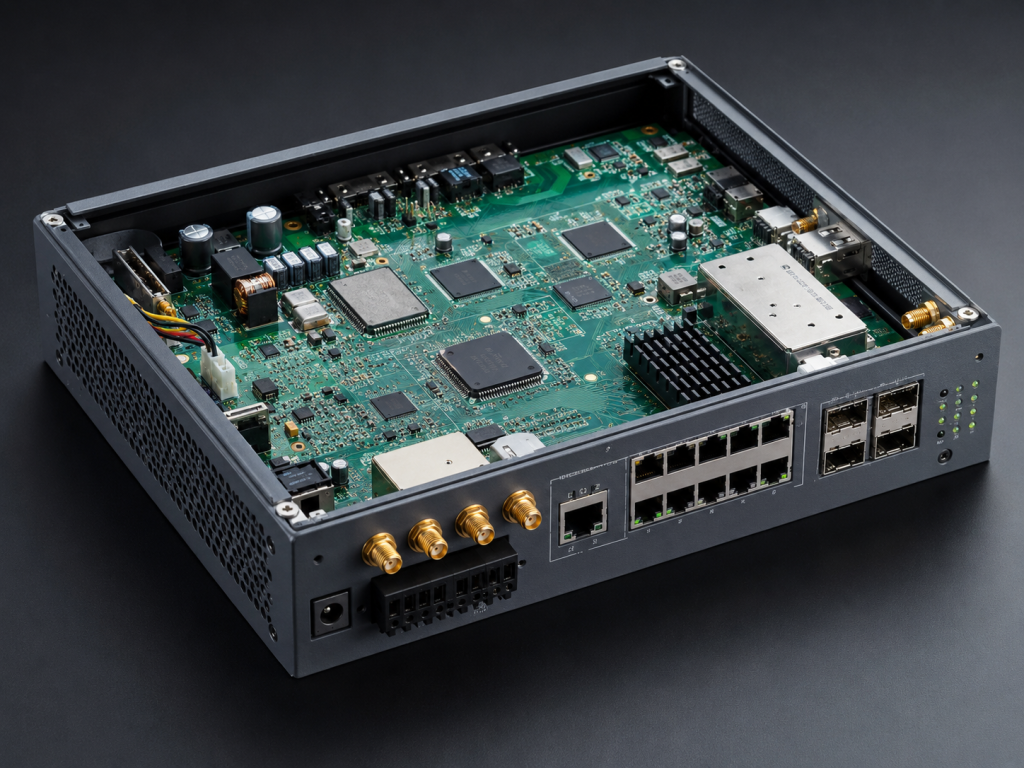
What Components Are Commonly Used in Telecommunications?
Telecommunications equipment uses a wide range of electronic components. These parts need to support signal processing, power conversion, data transmission, RF performance, thermal stability, and system protection.
Common telecommunications components include:
| Component Type | Common Use in Telecommunications Equipment |
|---|---|
| RF ICs | Signal amplification, switching, modulation, frequency conversion |
| Power Management ICs | Voltage regulation, DC-DC conversion, battery and power rail control |
| MCUs and Processors | System control, communication protocol handling, peripheral management |
| FPGAs and CPLDs | High-speed logic processing, interface conversion, custom signal control |
| Oscillators and Crystals | Clock generation, timing control, frequency stability |
| Connectors | Board-to-board, RF, coaxial, antenna, Ethernet, and power connections |
| Capacitors and Resistors | Filtering, impedance matching, decoupling, biasing, and signal conditioning |
| Inductors and Ferrite Beads | EMI suppression, filtering, power conversion, RF circuit tuning |
| Transistors and MOSFETs | Switching, amplification, power control |
| Protection Devices | ESD diodes, TVS diodes, surge protection, overcurrent protection |
| Optocouplers and Isolation Components | Signal isolation and safety separation |
| Memory ICs | Firmware storage, system data, configuration memory |
| Ethernet and Interface ICs | Data communication, PHY interface, protocol conversion |
In telecom boards, even passive components can influence signal quality. For example, capacitor ESR, resistor tolerance, inductor Q value, connector impedance, and oscillator stability may affect the final performance of a communication module or base station control board.
Because of this, component selection should be reviewed together with electrical requirements, PCB layout, RF performance, thermal behavior, and expected production volume.
What Are the Key Requirements for Telecommunications Components?
Telecommunications components usually need more than basic electrical compatibility. These products are often used in communication infrastructure, industrial networking equipment, wireless devices, gateway systems, antenna modules, and data transmission equipment. Stability matters.
1. Stable Electrical Performance
Telecom circuits often handle high-frequency signals, fast digital interfaces, and sensitive analog sections. Components should support stable electrical behavior across the expected working range.
Important parameters may include:
- Frequency range
- Insertion loss
- Return loss
- Impedance
- Phase noise
- Output ripple
- Voltage tolerance
- Current rating
- Signal integrity performance
For RF-related parts, a small parameter mismatch may affect signal attenuation, antenna efficiency, or communication distance.
2. Wide Temperature Range
Many telecommunications products are installed in outdoor cabinets, base stations, industrial facilities, or equipment rooms. Components may need to support industrial-grade temperature ranges, such as -40°C to +85°C or higher.
Temperature stability is especially important for:
- Oscillators
- RF ICs
- Power modules
- Connectors
- Electrolytic capacitors
- DC-DC converters
- Protection devices
3. Long Lifecycle Availability
Telecommunications equipment often has a longer product lifecycle than consumer electronics. A telecom product may need maintenance, repair, or production support for many years.
Therefore, component lifecycle status should be checked early. Engineers and buyers should pay attention to:
- Active status
- NRND status
- EOL notice
- Last-time-buy date
- Authorized stock availability
- Alternative part availability
- Manufacturer roadmap
A component that looks suitable today may create sourcing pressure after mass production starts.
4. Reliable Batch Consistency
Telecom products need stable performance across batches. Mixed batches, unknown sources, or poorly stored components may create reliability risks.
For critical parts, buyers should check:
- Manufacturer label
- Date code
- Lot number
- Package condition
- Moisture sensitivity level
- Storage condition
- Traceability records
Batch consistency is particularly important for RF components, timing devices, power ICs, and connectors.
5. Compliance and Documentation
Depending on the final application and market, telecom components may need documentation support such as RoHS, REACH, material declaration, original certificate, datasheet, test report, or traceability record.
For higher-value telecom projects, documentation is not just a purchasing detail. It supports quality control, audit preparation, and future failure analysis.
What Sourcing Challenges Do Telecommunications Customers Face?
Telecommunications customers often deal with complex BOMs. A single communication board may include RF devices, digital ICs, power components, precision passives, connectors, memory, protection components, and customized modules. This makes sourcing more difficult.
1. Long Lead Time
Some RF ICs, FPGAs, network interface chips, and power management ICs may have long lead times. When demand increases suddenly, standard delivery schedules may no longer match the customer’s production plan.
This is common in:
- Communication modules
- Router boards
- Gateway devices
- Base station equipment
- Industrial networking boards
- Antenna control systems
2. EOL and Obsolete Components
Telecom products often stay in the market for years. During that period, some components may become obsolete or enter last-time-buy status.
EOL issues are common for:
- Legacy interface ICs
- Older power chips
- RF switches
- Memory devices
- Specific connectors
- Oscillators with special frequency requirements
Once an EOL notice appears, customers need a fast replacement plan. Waiting until the original part disappears from the market usually makes the situation more expensive and harder to control.
3. Parameter-Sensitive Replacement
Telecommunications components are not always easy to replace. Even when two parts look similar, small differences can affect performance.
For example:
- A connector with different impedance may affect RF transmission.
- A power IC with different switching frequency may require layout or inductor changes.
- An oscillator with different stability may affect timing accuracy.
- An RF amplifier with different gain may change signal balance.
- A TVS diode with different capacitance may influence high-speed signal quality.
This is why telecom component alternatives should be reviewed carefully before purchase.
4. Counterfeit and Quality Risk
High-demand ICs and obsolete components are more exposed to counterfeit risk. For telecom boards, using uncertain parts may affect long-term reliability.
To reduce risk, customers need suppliers that can support:
- Original sourcing
- Authorized channel checking
- Visual inspection
- X-Ray inspection
- De-Cap testing when needed
- Functional testing when applicable
- Full delivery traceability
5. BOM Cost Pressure
Telecom projects may face cost pressure during mass production. However, simply choosing the lowest-cost component may affect stability or production yield.
A better approach is to review the BOM from several angles:
- Which parts are cost drivers?
- Which parts have stable alternatives?
- Which parts should remain unchanged?
- Which parts require engineering approval?
- Which components can be replaced without layout changes?
- Which items need sample verification?
This helps reduce cost while keeping the design safe.
How Can Component Alternatives Help Telecommunications Projects?
Component alternatives can help telecom projects reduce delivery pressure, control cost, and extend product lifecycle. However, replacement should be handled with a structured process.
A good alternative review should not only compare the part number. It should compare the complete application fit.
1. Electrical Parameter Matching
The first step is checking the core electrical parameters. For telecom products, this may include voltage, current, frequency range, gain, noise figure, capacitance, resistance tolerance, power rating, and thermal resistance.
For RF and high-speed applications, extra attention should be given to:
- Impedance
- Signal loss
- Capacitance
- Frequency response
- Switching speed
- Jitter
- Phase noise
- Package parasitics
2. Package and Pin Compatibility
A replacement part may have similar electrical performance but a different package or pinout. This can affect PCB layout and production cost.
The review should confirm:
- Package type
- Pin count
- Pin definition
- Land pattern
- Height limitation
- Thermal pad structure
- Soldering requirement
Pin-to-pin alternatives are usually preferred when the project is already in production. For new designs, engineers may have more flexibility.
3. Thermal and Reliability Review
Telecom boards may work continuously for long hours. Power ICs, RF amplifiers, processors, and interface chips can generate heat.
Before confirming an alternative part, the team should review:
- Operating temperature
- Junction temperature
- Power dissipation
- Thermal resistance
- Derating requirements
- Long-term reliability data
This step helps keep the product stable in real operating conditions.
4. Supply Chain Evaluation
A technically suitable replacement still needs supply chain verification. The team should check whether the new part is easy to source and whether it has better lifecycle stability.
Key checks include:
- Manufacturer status
- Production lifecycle
- Stock availability
- Authorized distributor support
- MOQ
- Lead time
- Price trend
- Future supply risk
This is especially useful for telecommunications projects with repeat orders.
5. Sample Testing and Approval
For important components, the alternative should be tested before production approval.
Testing may include:
- Power-on test
- Functional test
- Signal test
- Thermal test
- Compatibility test
- RF performance check
- Aging or reliability test if needed
For high-frequency telecom applications, practical verification is very important because datasheet similarity does not always mean equal board-level performance.
Case Study: How We Solved a Component Issue for a Telecommunications Customer
A telecommunications equipment customer was preparing a repeat production order for an industrial gateway board. The board was used in communication control equipment and included an Ethernet PHY, DC-DC converter, crystal oscillator, ESD protection devices, RF connector, and several precision passive components.
During BOM preparation, the customer found that one power management IC had a long lead time. At the same time, a specific Ethernet-related component was close to EOL status. If the customer waited for the original parts, the production schedule would be delayed.
Customer Challenge
The customer needed three things:
- Keep the current PCB layout as much as possible
- Avoid unstable market stock
- Find reliable replacement parts for production validation
The project could not accept random substitution because the board handled communication signals and required stable operation.
Our Review Process
First, we reviewed the full BOM and separated the components into several risk levels:
- Critical ICs
- RF and communication-related components
- Power devices
- Timing components
- Protection components
- Standard passives
Then we checked the lifecycle status, available stock, lead time, package compatibility, and electrical parameters of the risky parts.
For the power management IC, we compared several alternatives based on:
- Input voltage range
- Output current
- Switching frequency
- Efficiency
- Feedback voltage
- Package
- Thermal performance
- Recommended layout requirements
For the Ethernet-related component, we checked the manufacturer’s lifecycle information and prepared a second-source option with better availability.
Alternative Recommendation
We provided the customer with an alternative comparison table. It included the original part, recommended replacement, key parameter differences, package information, stock status, lead time, and engineering notes.
The customer’s engineering team reviewed the options and selected two parts for sample testing.
Testing and Result
After sample approval, the customer completed a small trial production run. The alternative power component passed the functional test and thermal review. The communication-related replacement also met the board-level requirements.
The result was clear:
- The customer avoided a long production delay.
- The replacement plan kept the existing PCB layout.
- The BOM risk was reduced before mass production.
- The customer received better visibility into future supply status.
This case shows why telecommunications component sourcing should combine purchasing ability with technical review. Fast delivery is useful, but safe replacement planning brings more long-term value.
How Do We Support Telecommunications Component Sourcing?
For telecommunications customers, we support more than simple part number purchasing. Our work starts from BOM review and continues through sourcing, inspection, delivery, and traceability.
1. BOM Health Analysis
We can review the BOM before production and identify high-risk items, including:
- EOL components
- Long lead-time parts
- Single-source components
- High-cost items
- Obsolete ICs
- Risky market stock
- Parts with weak alternative options
This helps customers plan earlier and reduce urgent purchasing pressure.
2. Original Component Sourcing
We work with qualified supplier channels to source original components for telecom projects. This includes ICs, connectors, RF parts, passives, power devices, memory, and protection components.
For important parts, we can help check:
- Manufacturer
- Part number
- Package
- Date code
- Lot information
- Stock source
- Delivery schedule
3. Alternative Component Support
When original components are unavailable, expensive, or close to EOL, we can help customers prepare alternative options.
Our alternative review may include:
- Electrical comparison
- Package comparison
- Pinout review
- Supply status check
- Lifecycle check
- Suggested sample testing
- Engineering notes for approval
This is especially useful for telecom boards with repeat production demand.
4. Obsolete and Hard-to-Find Component Sourcing
Some telecommunications products still use legacy ICs or discontinued components. We can help search for obsolete and hard-to-find parts while keeping quality control in focus.
For higher-risk items, additional inspection can be arranged.
5. Component Inspection and Testing Support
To support quality control, we can provide inspection support such as:
- Visual inspection
- X-Ray inspection
- De-Cap testing when required
- Functional testing when applicable
- Package and marking verification
- Shipment documentation review
These checks help reduce the risk of counterfeit, mixed, or poor-condition components.
6. Traceability and Delivery Control
Telecommunications customers often need clear records. We can support traceability from RFQ to shipment, including supplier source, batch information, inspection records, packaging status, and delivery details.
For urgent projects, fast response and flexible sourcing are important. For long-term projects, stable supply planning is even more valuable.
FAQs About Telecommunications Components
Q1: What should be checked before buying components for telecom equipment?
A1: Buyers should check electrical parameters, package, lifecycle status, lead time, stock source, date code, and traceability. For RF or high-speed parts, impedance, signal loss, capacitance, frequency range, and board-level performance should also be reviewed.
Q2: Can telecom components be replaced with similar part numbers?
A2: Similar part numbers can be considered, but they should not be approved only by appearance or basic specifications. The replacement should be checked for electrical performance, package compatibility, thermal behavior, lifecycle status, and test results.
Q3: Why are EOL components a serious issue in telecommunications projects?
A3: Telecom products often have long service lives. If a key component becomes obsolete during production or maintenance, it may affect future orders, repair support, and product continuity. Early EOL checking helps customers prepare alternatives before supply becomes difficult.
Q4: How can buyers reduce counterfeit risk when sourcing telecom ICs?
A4: Buyers should work with reliable sourcing partners, request traceability records, check packaging and date codes, and use inspection methods such as X-Ray or De-Cap testing when necessary. For high-value parts, functional verification is also helpful.
Q5: What types of telecom components are usually harder to source?
A5: RF ICs, FPGAs, Ethernet PHYs, power management ICs, specific oscillators, legacy interface chips, and special connectors can be harder to source, especially when demand is high or the part is close to EOL.
Q6: Is BOM review necessary before telecom component sourcing?
A6: Yes. BOM review helps identify risky components before purchasing starts. It can reveal long lead-time parts, obsolete items, high-cost components, and parts that may need approved alternatives.
Q7: Can one telecom BOM include both original and alternative components?
A7: Yes, but the alternative components should be reviewed and approved before production. For critical parts, sample testing or small-batch validation is recommended.
Q8: How does traceability help telecommunications customers?
A8: Traceability helps customers know where components come from, which batch was used, how the parts were inspected, and when they were shipped. This is useful for quality control, audits, and future failure analysis.
Ready to Source Telecommunications Components with More Confidence?
If you are working on a telecommunications project and need support with component sourcing, BOM review, EOL checking, obsolete parts, or alternative component selection, our team can help you move faster with less supply chain uncertainty.
We support telecom customers with original component sourcing, qualified supplier channels, alternative part analysis, inspection support, and traceability management. Whether your project involves RF modules, gateway boards, communication control systems, network equipment, or base station-related electronics, we can help you find suitable components and reduce sourcing risks before they affect production.
Send us your BOM today, and our team will help review availability, lead time, lifecycle risk, and possible alternatives.
Contact us: sales@melsonchip.danyupcbs.com
Request a Quote | Upload Your BOM | Get Component Support