 English
 中文
 english


When requesting an XC7A200T-1FFG1156C quote, price is only one part of the decision. You also need to know whether the required quantity is genuinely available, whether the date code meets your acceptance rules, how the devices are packaged, and when they can actually ship.
For an initial RFQ, start with three details: quantity, date code requirement, and delivery location. These are usually enough to check relevant sourcing options. Once availability is clear, packaging, lot information, inspection requirements, and delivery terms can be confirmed before the order is placed.
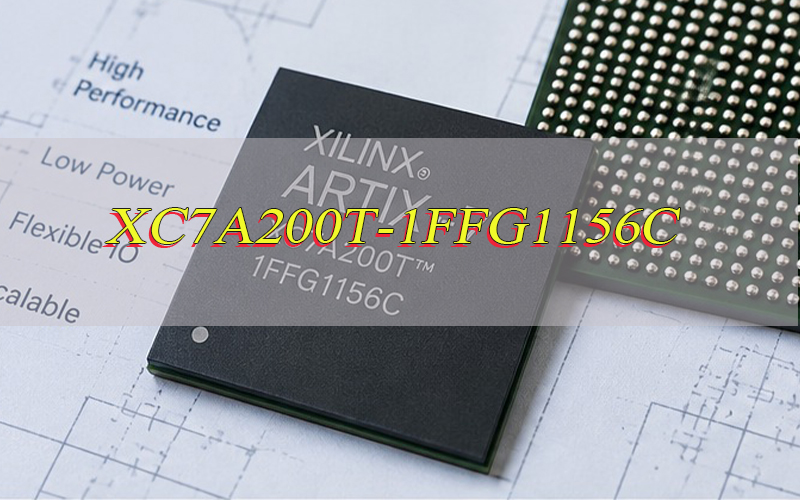
What Should You Include in an XC7A200T-1FFG1156C RFQ?
An effective RFQ does not need to be long. Start with the information that directly affects availability and quotation accuracy:
- Quantity: the number of devices required.
- Date code requirement: for example, 2024 or newer, within three years, or no fixed restriction.
- Delivery location: the country or destination where the devices need to be shipped.
If your project has a fixed requirement for one lot, sealed packaging, inspection, or a specific delivery deadline, include it as an additional condition rather than turning the first inquiry into a long purchasing specification.
For a released BOM, keep the complete ordering code XC7A200T-1FFG1156C unchanged. Similar XC7A200T variants may differ in speed grade, package, or temperature grade, so they should not be treated as automatic substitutes. If your design does not allow alternatives, state no substitution without written approval in the RFQ.
How Does Quantity Affect XC7A200T-1FFG1156C Availability?
The required quantity can change the source, lot structure, packaging, and delivery plan. A small requirement may be covered by one tray or one lot, while several hundred devices may need to come from multiple lots, incoming inventory, or separate shipments.
This is why an online inventory figure should not automatically be treated as confirmed stock. A displayed quantity may combine multiple sources, different date codes, incoming material, or inventory that has not yet been reserved. What matters for production planning is the quantity that can actually be confirmed and allocated to your order.
When reviewing availability, distinguish between ready stock, incoming stock, and sourcing availability. Ready stock means the devices are physically available; incoming stock has not yet arrived; sourcing availability means the required quantity still needs to be secured.
If you need 300 pieces now and another 200 later, state that requirement clearly so the quotation reflects the actual shipping plan instead of only showing a total quantity.
What Date Code Requirement Should You Specify?
Avoid vague wording such as “new date code.” It can mean different things to different suppliers and often creates unnecessary follow-up questions.
A clearer RFQ may specify:
- 2024 or newer
- 2023 or newer
- No more than three years old at shipment
- One date code required
- Mixed date codes accepted if identified separately
An older date code does not automatically mean that an XC7A200T-1FFG1156C device is unsuitable. Storage conditions, moisture control, packaging condition, traceability, and your own quality requirements also affect whether the stock is acceptable.
If your customer or internal quality system has a date-code limit, define it before sourcing begins. When the exact date code cannot be confirmed at the quotation stage, ask for it to be verified before shipment. Label and device-marking photos can also be reviewed when additional traceability is required.
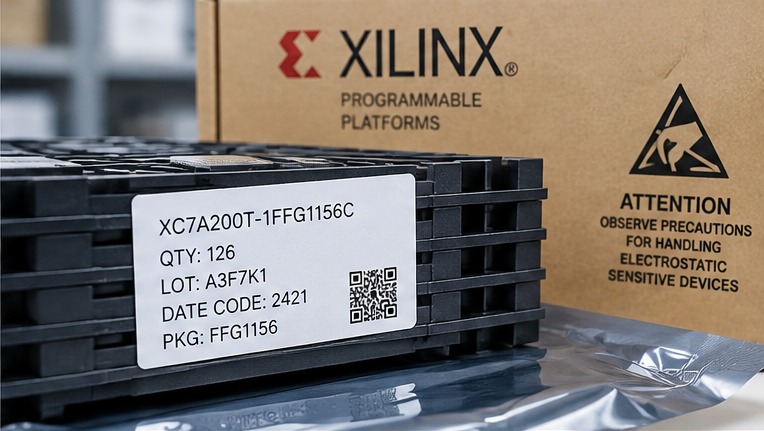
What Packaging and Lot Conditions Matter for FFG1156 Devices?
For an FFG1156 BGA device, packaging needs to protect the solder balls, maintain suitable moisture control, and preserve lot identification. Simply stating “original packaging” does not fully describe whether the parts are suitable for receiving and assembly.
Factory-sealed packaging usually provides the clearest handling history, but opened or split packaging is not automatically unacceptable. A split tray may still be usable if the correct tray is used, the devices are protected from excessive movement, moisture handling remains controlled, and the lot can still be identified.
The real concern is uncertainty. If the handling history is unclear, device markings do not match the labels, different lots have been mixed without identification, or the tray no longer protects the BGA package, the sourcing risk increases. For projects with strict receiving rules, confirm packaging and lot conditions before approving the order rather than after the shipment arrives.
How Should Lead Time and Delivery Be Confirmed?
A quoted lead time is only useful when you know what starts it. “Lead time: five days” may mean five days after the PO, after payment, after inspection, or after incoming stock arrives. Those are very different delivery commitments.
A useful quotation should show the confirmed quantity, expected shipping date, any remaining balance, and the expected date for that balance. For example, an offer for 500 pieces may actually consist of 300 ready to ship and 200 arriving later. That should not be treated as the same situation as 500 pieces of ready stock.
If your production line cannot start until the full quantity arrives, make that clear before accepting a split-shipment plan. A partial shipment only has value when that quantity can genuinely support the project. For purchasing purposes, the most useful delivery commitment answers two questions: how many devices will ship, and on what date?
Should You Accept a Different XC7A200T Ordering Code?
Similar XC7A200T part numbers should not be treated as interchangeable simply because they belong to the same FPGA family.
The full ordering code identifies characteristics such as the speed grade, package, and temperature grade. For example, XC7A200T-2FFG1156C uses a different speed grade from XC7A200T-1FFG1156C. A different package can affect the PCB footprint and pin assignment, while a different temperature suffix changes the specified operating range.
If your BOM has already been approved around XC7A200T-1FFG1156C, purchasing should keep that ordering code unchanged unless engineering approves an alternative. Any proposed substitute should be quoted separately so that price or availability does not accidentally override the design requirement.
For a fixed BOM, no substitution without written approval is the safer purchasing rule.
When Should Inspection or Testing Be Added?
Inspection should be matched to the sourcing risk rather than added as a routine step to every order. A shipment with consistent source records, packaging, labels, and markings may only require documentation review and visual inspection, while higher-risk material may justify additional testing.
Common inspection options include label and marking review, visual inspection, X-ray inspection, decapsulation, and functional testing. Visual inspection can identify physical damage, inconsistent markings, contamination, or solder-ball issues. X-ray can provide additional information about internal construction, while decapsulation or functional testing may be appropriate when the source history is less clear or the application warrants deeper verification.
No single test should be treated as universal proof of authenticity. A stronger decision comes from reviewing the source information, labels, packaging, device markings, inspection findings, and test results together.
Before testing begins, agree on the sample size, method, acceptance criteria, cost, and reporting requirement.

What Traceability Records Should You Keep?
Traceability is most useful when the records connect the original RFQ to the actual devices received. That chain may include the final quotation, order confirmation, date code and lot details, label photos, inspection reports, packing documents, invoice, shipping information, and receiving records.
More paperwork does not automatically mean better traceability. The useful question is whether the records consistently describe the same part number, quantity, lot, and shipment.
If a discrepancy appears later, this makes it easier to determine whether the mismatch began during sourcing, inspection, packing, shipping, or receiving. For long-life products, maintenance programs, or recurring procurement, retained sourcing and inspection records can make future orders easier to review because previous lot conditions and acceptance decisions do not need to be reconstructed from scratch.
How Should You Compare XC7A200T-1FFG1156C Quotes?
Do not compare quotations by unit price alone. Two quotations for the same part number can represent very different supply conditions.
| Check | What to Confirm |
|---|---|
| Part number | Is the offer for the exact XC7A200T-1FFG1156C ordering code? |
| Quantity | How many pieces are confirmed and reservable? |
| Availability | Ready stock, incoming stock, or still being sourced? |
| Date code | Confirmed, pending, or mixed? |
| Lot | One lot or multiple lots? |
| Packaging | Sealed, resealed, or split trays? |
| Delivery | Is there a confirmed shipping date? |
| Inspection | What inspection or testing is included? |
| Traceability | What supporting records will be provided? |
| Total cost | What is included beyond the unit price? |
For example, one quotation may offer 500 pieces with a confirmed date code, one lot, acceptable packaging, and a firm shipping date. Another may offer a lower price but leave the date code, lot mix, and delivery date unresolved. The second offer is not automatically unsuitable, but those unresolved conditions need to be clarified before the prices can be compared fairly.
The more useful quotation is the one that fits your quantity, schedule, quality requirements, and budget with the fewest unresolved conditions. Before releasing the PO, confirm that the final quotation still matches the approved ordering code, quantity, date code requirement, packaging condition, delivery plan, and inspection requirements.
Why Source XC7A200T-1FFG1156C Through Melson Components?
Melson Components supports independent sourcing of XC7A200T-1FFG1156C for prototype, production, maintenance, and replacement requirements. As an independent electronic component sourcing partner rather than an AMD-authorized distributor, each sourcing opportunity is evaluated using the available supply evidence for the specific lot.
Depending on the sourcing risk and customer requirement, inspection support can include visual inspection, X-ray inspection, decapsulation, and functional testing. RFQ, sourcing, inspection, packing, and shipment records can also be retained for up to 15 years, providing a clearer record of the supplied material.
Availability, date code, lot, packaging, and delivery should always be confirmed against the current quotation rather than assumed from an older online listing.
FAQs About XC7A200T-1FFG1156C RFQs
Q1: What does FFG1156 mean in XC7A200T-1FFG1156C?
A1: FFG1156 is the package designation with 1,156 contacts. It does not mean the device has 1,156 user I/Os.
Q2: What does the -1 speed grade mean?
A2: The -1 identifies the speed grade of the device. A different speed grade should not be treated as an automatic replacement.
Q3: What does the C suffix mean?
A3: The C suffix indicates commercial temperature grade. A different temperature suffix represents a different ordering option.
Q4: Is XC7A200T-1FFG1156C still available for sourcing?
A4: Availability changes with the market and source. Confirm current quantity, date code, lot, and shipping status against the actual quotation rather than relying on an older online listing.
Q5: Are older XC7A200T-1FFG1156C date codes automatically unsuitable?
A5: No. Date code alone does not determine suitability. Storage condition, moisture handling, packaging, and traceability also matter.
Q6: Can XC7A200T-2FFG1156C replace XC7A200T-1FFG1156C?
A6: Not automatically. The two devices have different speed grades, so engineering approval is required before substitution.
Q7: What if the 2D code on the device is missing or unreadable?
A7: Treat it as a traceability warning, not automatic proof of a counterfeit part. Review the remaining markings, labels, source records, and inspection evidence before accepting the lot.
Q8: Can X-ray inspection detect a remarked FPGA?
A8: X-ray can reveal internal inconsistencies, but it cannot by itself confirm or rule out remarking. Surface markings, labels, source records, and other inspection results should also be reviewed.
Q9: Can decapsulation confirm the die inside an XC7A200T device?
A9: Decapsulation can expose the internal die for comparison and identification. It is a destructive inspection method, so it is normally applied to an agreed sample rather than the full lot.
Q10: Why can two XC7A200T-1FFG1156C quotes have very different prices?
A10: Price can vary with quantity, source, date code, lot, packaging, inspection, and delivery conditions. Compare the supply conditions behind each price, not just the unit cost.
Would you like to get an XC7A200T-1FFG1156C quote faster? Send your quantity, date code requirement, and delivery location to sales@melsonchip.com. Melson Components can use these details to check relevant sourcing options and confirm the available date code, packaging, inspection options, pricing, and delivery conditions with fewer follow-up questions.