 English
 中文
 english

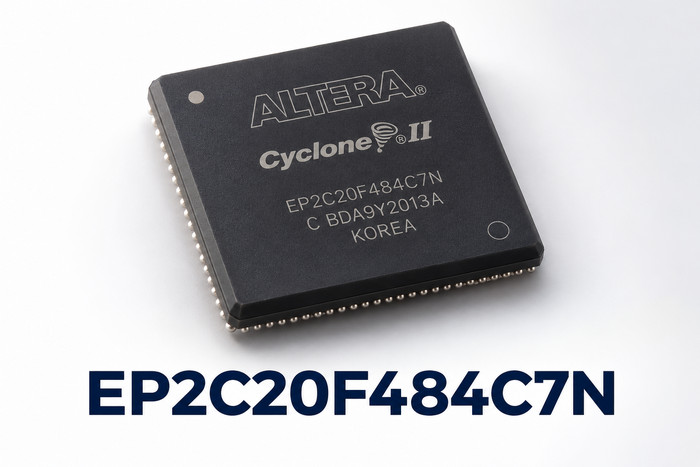
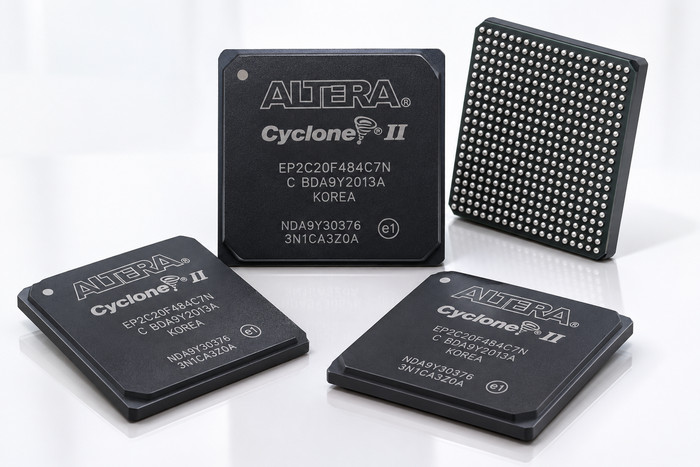
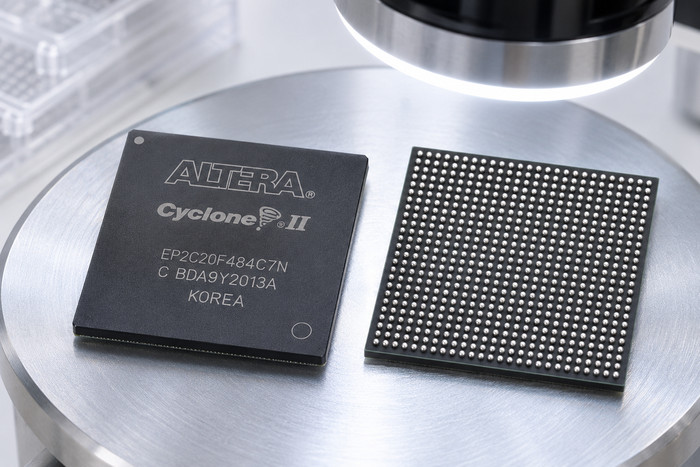
EP2C20F484C7N is a lead-free Altera Cyclone II FPGA featuring 18,752 logic elements, 239,616 embedded RAM bits, and a 484-pin FineLine BGA package. It operates with a nominal 1.2 V core supply and belongs to the commercial temperature category with speed grade 7.
For existing PCB designs, sourcing the exact EP2C20F484C7N may be more cost-effective than replacing the FPGA and redesigning the board. However, speed-grade compatibility, date code, lot traceability, packaging condition, and availability must be verified before purchasing. If the original device is unavailable, can C6N or C8N serve as an alternative? What should engineers and buyers check before placing an order?
What Is EP2C20F484C7N Used For?
EP2C20F484C7N is commonly used in industrial control, communication interfaces, data acquisition, and embedded systems. Its programmable logic, embedded RAM, hardware multipliers, and PLL resources support digital control, data processing, and clock management within a single FPGA.
Typical applications include:
- Industrial control equipment: Implements control logic, state machines, timing coordination, and digital interface management.
- Communication equipment: Handles communication protocols, data routing, and conversion between digital interfaces.
- Data acquisition systems: Supports digital signal processing, data buffering, clock synchronization, and interface control.
- Embedded systems: Enables custom peripherals, control functions, and soft-core processor applications.
- Existing PCB maintenance: Provides replacement devices for equipment originally designed around Cyclone II FPGAs.
EP2C20F484C7N is particularly suitable for established products with validated hardware designs. For new projects requiring long-term production, newer FPGA platforms should also be evaluated for future availability and development tool support.
What Are the Key EP2C20F484C7N Specifications?
EP2C20F484C7N provides 18,752 logic elements, 52 M4K RAM blocks, 26 embedded 18 × 18-bit multipliers, and four PLLs. The following specifications are important for engineering verification, BOM matching, and component procurement.
| Parameter | EP2C20F484C7N Specification |
|---|---|
| Manufacturer | Altera |
| FPGA family | Cyclone II |
| Logic elements (LEs) | 18,752 |
| Logic array blocks (LABs) | 1,172 |
| Total embedded RAM | 239,616 bits (including parity bits) |
| M4K RAM blocks | 52 |
| Embedded multipliers | 26 (18 × 18-bit) |
| PLLs | 4 |
| Maximum user I/O pins | 315 |
| Package | 484-pin FineLine BGA |
| Package dimensions | 23 × 23 mm |
| Core supply voltage | 1.2 V nominal (1.15–1.25 V) |
| Speed grade | 7 |
| Commercial junction temperature (TJ) | 0°C to 85°C |
| Environmental suffix | N, lead-free package |
Several specifications require particular attention during PCB design and assembly:
- Embedded RAM: The 52 M4K blocks provide 239,616 total bits, including parity bits. Actual usable data capacity depends on the selected memory configuration.
- Multiplier resources: The 26 embedded 18 × 18-bit multipliers can alternatively be configured as 52 independent 9 × 9-bit multipliers. These capacities cannot be added together.
- I/O availability: The maximum of 315 user I/O pins does not mean every pin is available for unrestricted general-purpose use. Clock, configuration, and I/O bank assignments must also be considered.
- Power requirements: The 1.2 V specification applies to the FPGA core. I/O banks require appropriate supply voltages according to the selected interface standards.
- BGA compatibility: PCB pads, ball assignments, electrical connections, and assembly requirements must match the 484-pin FineLine BGA package.
Purchasing the correct FPGA is only the first step. Incorrect I/O voltages, ball assignments, or configuration connections can prevent the assembled PCB from operating correctly even when the device itself is functional.
What Does the EP2C20F484C7N Part Number Mean?
Each section of the EP2C20F484C7N ordering code identifies a specific device characteristic, including family, density, package, temperature rating, speed grade, and lead-free designation.
- EP2C: Cyclone II FPGA family.
- 20: EP2C20 density, providing 18,752 logic elements.
- F: FineLine BGA package.
- 484: 484-pin package.
- C: Commercial temperature grade.
- 7: Speed grade 7.
- N: Lead-free package designation.
The C7N designation identifies the required temperature, speed, and package-related ordering characteristics.
If a supplier quotes only EP2C20 or EP2C20F484, the remaining characters must be confirmed before the device can be accepted. Devices from the same family with identical pin counts are not necessarily interchangeable.
Certain Cyclone II devices also include an additional A designation for the Fast-On option. These ordering configurations must be checked separately rather than treated as equivalent to the standard version.
What Are the Differences Between EP2C20F484C6N, C7N, and C8N?
EP2C20F484C6N, C7N, and C8N belong to the Cyclone II EP2C20 family and use the same 484-pin FineLine BGA package type. Their main difference is speed grade.
| Part Number | Speed Grade | Junction Temperature (TJ) | Replacement Considerations |
|---|---|---|---|
| EP2C20F484C6N | 6, faster | 0°C to 85°C | Requires timing verification and substitution approval |
| EP2C20F484C7N | 7, target device | 0°C to 85°C | Exact device specified in the original BOM |
| EP2C20F484C8N | 8, slower | 0°C to 85°C | May not meet existing timing requirements |
| EP2C20F484I8N | 8, industrial | -40°C to 100°C | Wider temperature range but requires timing verification |
Can C6N replace C7N?
C6N has a faster speed grade and may meet the timing requirements of an existing C7N design. However, timing analysis, device configuration, and production approval must still be reviewed before substitution.
Can C8N replace C7N?
C8N is a slower speed grade. If the original design has limited timing margin, using C8N may introduce timing violations and affect system stability.
Can I8N replace C7N?
I8N provides a wider junction temperature range, but its speed grade is 8. An industrial temperature rating does not automatically make the device a suitable replacement for C7N.
For PCBs already in production, sourcing the original BOM-specified part is generally the preferred option. Any alternative should undergo engineering verification before volume purchasing.
What Is the Current EP2C20F484C7N Lifecycle Status?
As of November 2026, the Cyclone II family is classified as a Mature Product rather than a preferred FPGA platform for new designs.
This classification does not mean that every EP2C20F484C7N device has been discontinued, nor does it guarantee continued long-term availability.
For products already using this FPGA, four factors deserve attention:
- Future availability: Determine whether the remaining supply can cover planned production, service requirements, and spare parts.
- Development environment: Cyclone II’s last listed supported Quartus II version is 13.0sp1. Maintaining a compatible development environment is important for future engineering changes.
- Production continuity: For products expected to remain in manufacturing for several years, evaluate whether sufficient qualified inventory can be secured.
- Replacement costs: Migrating to a newer FPGA may require changes to PCB routing, power supplies, configuration circuits, firmware, and functional test procedures.
For established products with limited remaining production quantities, retaining the original EP2C20F484C7N can avoid unnecessary engineering changes.
For applications requiring several more years of production, the decision to retain or replace this device should reflect the remaining product lifecycle and supply risks.
How Can You Verify EP2C20F484C7N Stock and Component Authenticity?
EP2C20F484C7N sourcing requires verification of actual stock, component identity, manufacturing lot information, and physical condition. An advertised inventory quantity alone cannot establish whether the parts are suitable for production.
Check the following before purchasing:
- Exact part number: Confirm EP2C20F484C7N on quotations, device markings, and available packaging records. Different speed grades must not be mixed without approval.
- Date code and lot code: Request manufacturing date codes, lot identifiers, and available quantities for each lot.
- Source traceability: Prefer suppliers with clear procurement records and a documented supply chain.
- Packaging condition: Verify original trays or disclosed repackaging, moisture-barrier protection, humidity indicators, and available storage records.
- Physical inspection: Examine device markings, package dimensions, BGA solder balls, contamination, scratches, and evidence of previous handling.
- Testing requirements: Depending on sourcing risk, request visual inspection, dimensional checks, X-ray analysis, or appropriate electrical and functional testing.
- Material condition: Confirm whether devices are new, long-stored, reballed, or reclaimed. Unapproved mixing of different material conditions should not be accepted.
A recent date code does not automatically guarantee better component quality. Improper storage, damaged packaging, and uncertain handling history may also affect solderability and reliability.
For long-stored devices obtained through non-authorized sources, representative samples should be evaluated before volume assembly. The inspection plan should account for differences between sample lots and the intended production inventory.
Can Another FPGA Replace EP2C20F484C7N Without Redesigning the PCB?
An FPGA cannot be considered a direct EP2C20F484C7N replacement based only on package dimensions or logic capacity. Avoiding a PCB redesign requires the replacement to satisfy the original hardware connections, electrical characteristics, and functional requirements.
At least six areas should be verified:
- Package and ball assignments: Compare BGA footprint dimensions, ball locations, power pins, clock pins, and configuration connections.
- Electrical compatibility: Verify core voltage, I/O bank voltages, supported I/O standards, and current requirements.
- Logic resources: Confirm sufficient logic elements, embedded RAM, multipliers, PLLs, and usable I/O pins.
- Timing analysis: Recompile the existing project for the candidate device and check critical timing paths.
- Configuration compatibility: Verify external configuration devices, JTAG connections, programming files, and required IP.
- Hardware validation: Test startup behavior, interface communication, functional operation, and relevant temperature conditions.
Replacing EP2C20F484C7N with another speed grade from the same device family may be easier to evaluate than migrating to a different FPGA family. Nevertheless, engineering verification remains necessary.
If a replacement belongs to another FPGA family, even a matching 484-pin BGA package does not guarantee pin compatibility. PCB routing, power supplies, and configuration circuits may need to be redesigned.
What Factors Affect EP2C20F484C7N Price and Lead Time?
EP2C20F484C7N pricing and lead time depend primarily on purchase quantity, sourcing channel, stock availability, date-code restrictions, and inspection requirements.
The main factors include:
- Order quantity: Prototype orders and volume purchases may have different unit prices, packaging arrangements, and supply conditions.
- Available stock: Physically confirmed inventory with verified part numbers and lot information can generally be scheduled more reliably than unallocated supply.
- Date-code requirements: Restricting purchases to specific manufacturing years may reduce available sourcing options.
- Lot restrictions: Requiring a single production lot can make sourcing more difficult, particularly for larger quantities.
- Inspection requirements: Additional authenticity verification, electrical testing, and traceability documentation may increase costs and processing time.
- Packaging and shipping: Moisture protection, repackaging, destination, and delivery arrangements can affect the final quotation.
The actual lead time must be confirmed against the available stock, required quantity, acceptable date code, and delivery destination. A universal delivery commitment is not appropriate for this mature FPGA.
For products requiring continuous manufacturing, define production demand and spare-part requirements early. This reduces the risk of unexpected substitutions or production interruptions caused by limited component availability.
How Can Melson Components Support EP2C20F484C7N Sourcing?
Melson Components supports EP2C20F484C7N component sourcing for prototype development, equipment maintenance, and ongoing production. We help customers confirm part-number requirements, evaluate available sourcing options, and clarify purchasing conditions before placing an order.
Our sourcing support includes:
- Exact Part Number Matching: Verify EP2C20F484C7N against the customer’s BOM to avoid incorrect speed grades, temperature ratings, or package variants.
- Availability and Pricing: Check available quantities, sourcing options, and quotation conditions based on the required order volume.
- Date Code and Lot Requirements: Review acceptable date codes, lot quantities, and available traceability information before order confirmation.
- Component Verification: Coordinate available packaging records, component condition information, and requested inspection documentation according to sourcing requirements.
- Alternative Part Evaluation: Identify potential variants when the original device is difficult to source. Any substitution requires customer approval.
- Prototype and Production Quantities: Support sourcing inquiries for small prototype orders, maintenance requirements, and larger production quantities, subject to confirmed availability.
- Delivery Coordination: Confirm shipment requirements, destination, and estimated lead time based on the available supply.
For mature FPGA devices such as EP2C20F484C7N, accurate part identification and verified sourcing conditions are essential. Melson Components helps buyers clarify these requirements before committing to an order.
What Should You Include in an EP2C20F484C7N RFQ?
An EP2C20F484C7N quotation request should clearly specify the exact part number, required quantity, acceptable date code, and delivery destination to help suppliers identify suitable sourcing options.
Include the following information:
- Exact Part Number: EP2C20F484C7N
- Manufacturer: Altera
- Required Quantity: Prototype, maintenance, or production quantities
- Acceptable Date Code: Specify any manufacturing-date restrictions
- Delivery Location: Country, city, or delivery address
- Required Delivery Date: Target arrival date or purchasing deadline
- Packaging Requirements: Original packaging, tray condition, and moisture-protection requirements
- Traceability Requirements: Available lot information, sourcing records, and inspection documentation
- Substitution Policy: Confirm whether alternative speed grades or part numbers are acceptable
Providing complete purchasing requirements helps reduce quotation delays and prevents unsuitable component substitutions. If specific date codes, original packaging, or additional testing are required, include these conditions in your initial inquiry.
FAQs About EP2C20F484C7N
Q1: Does EP2C20F484C7N retain its configuration after power is removed?
A1: No. EP2C20F484C7N uses SRAM-based configuration memory, which loses its configuration data when power is removed. After power-up, the FPGA must be configured again through an external configuration device, controller, or supported configuration interface.
Q2: Does EP2C20F484C7N support 3.3 V I/O interfaces?
A2: Yes. Cyclone II supports I/O standards associated with 3.3 V, 2.5 V, 1.8 V, and 1.5 V interfaces, depending on the selected standard and I/O bank supply. The appropriate VCCIO voltage, I/O standard, and pin assignments must be verified during design.
Q3: Can EP2C20F484C7N connect directly to 5 V digital signals?
A3: EP2C20F484C7N should not be treated as a general 5 V-compatible I/O device. For 5 V logic interfaces, appropriate voltage-level conversion or interface protection may be required. Input and output voltages must remain within the permitted electrical limits.
Q4: Does EP2C20F484C7N require an external configuration memory?
A4: Not every application requires a dedicated external configuration memory device. Cyclone II supports configuration methods such as Active Serial, Passive Serial, and JTAG. For systems that must start automatically after power-up, configuration data must be supplied by an appropriate nonvolatile source or external controller.
Q5: What should be checked if EP2C20F484C7N fails to configure at startup?
A5: Start by checking the 1.2 V core supply and relevant I/O bank voltages. Then verify configuration-related signals, including nCONFIG, nSTATUS, and CONF_DONE. The configuration file, selected mode, external configuration circuitry, and startup timing should also be examined.
Q6: Can EP2C20F484C7N run a Nios II soft-core processor?
A6: Yes. The Cyclone II family supports Nios II-based embedded processor designs. The available processor configuration depends on FPGA logic and memory resources, peripheral requirements, and the development tools, IP, and software used in the project. Existing applications should retain their original project files and compatible development environment.
Q7: Does EP2C20F484C7N require a heatsink during operation?
A7: Not necessarily. Heatsink requirements depend on logic utilization, operating frequency, I/O loading, ambient temperature, PCB thermal design, and actual power consumption. Power estimation and thermal analysis should be used to determine whether additional cooling is required, with junction temperature verified against the permitted operating range.
Q8: How can BGA soldering defects be identified after EP2C20F484C7N assembly?
A8: X-ray inspection, board-level electrical tests, JTAG boundary-scan testing where supported, and functional testing can help identify assembly defects. X-ray inspection can reveal certain solder bridges, voids, and abnormal solder-ball structures, but not every open or intermittent connection can be conclusively detected using two-dimensional X-ray inspection alone.
Q9: Does the N suffix in EP2C20F484C7N mean the device is halogen-free?
A9: No. The N suffix identifies the lead-free package designation and does not independently establish halogen-free compliance. If RoHS, halogen-free, or other material compliance documentation is required, the applicable declarations should be checked for the exact ordering code.
Q10: Can a PCB using EP2C20F484C7N be repaired if the original FPGA project files are missing?
A10: Repair options depend on the failure and the configuration data still available. If only the FPGA is damaged and the existing system can provide valid configuration data, replacement may be possible without redevelopment. If the programming files, configuration memory data, and original design records are unavailable, recovering the system may require substantial engineering work.
Conclusion
EP2C20F484C7N remains relevant for maintaining and manufacturing existing Cyclone II-based electronic products. With 18,752 logic elements, 239,616 embedded RAM bits, a 484-pin FineLine BGA package, and speed grade 7, this FPGA requires careful part-number matching, traceable sourcing, and appropriate handling to support reliable procurement.
Looking for EP2C20F484C7N with the right date code, competitive pricing, and reliable delivery? Whether you need a few devices for equipment repair or larger quantities for ongoing production, Melson Components can help review your sourcing requirements, check available supply options, and prepare a quotation based on your purchasing needs.
Send your EP2C20F484C7N RFQ to sales@melsonchip.com today. Include your required quantity, acceptable date code, and delivery location to receive a project-specific quotation with available pricing, stock information, and estimated lead time.