 English
 中文
 english

The 10CL055YF484I7G is an Altera Cyclone 10 LP FPGA in a 484-ball FBGA package. However, matching the device family and ball count alone does not guarantee compatibility with your production BOM. Before ordering, verify the exact part number, core voltage, speed grade, temperature rating, and package specifications. You should also confirm actual stock availability, lot information, and delivery terms to avoid incorrect substitutions and production delays.
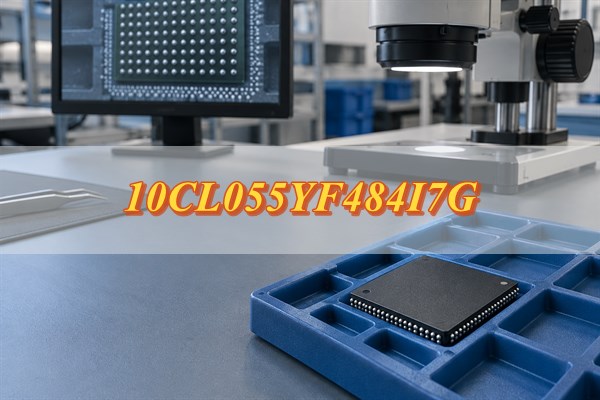
What Is the 10CL055YF484I7G and Where Does It Fit in the Cyclone 10 LP Family?
10CL055YF484I7G is a specific orderable Cyclone 10 LP device, not a general name for every 10CL055 FPGA in a 484-ball package.
For purchasing purposes, the same complete part number should appear in three places:
- Approved BOM: The specified device should be 10CL055YF484I7G.
- Supplier quotation: The offer should identify the same complete orderable part number.
- Delivered material: The package label, device marking, and traceability records should match the quoted device.
This comparison catches suffix changes before an incorrect voltage, temperature, speed, or package-material option reaches production.
Which 10CL055YF484I7G Specifications Matter Before You Buy?
The specifications most likely to affect design fit are logic capacity, embedded memory, multiplier resources, clocking, and available I/O. Before purchasing the 10CL055YF484I7G, you should be aware of the following specifications:
| Specification | Exact value |
|---|---|
| Manufacturer | Altera |
| FPGA family | Cyclone 10 LP |
| Device density | 10CL055 |
| Complete orderable part number | 10CL055YF484I7G |
| Logic elements | 55,856 |
| M9K memory blocks | 260 |
| Embedded memory | 2,340 Kb, equal to 2,396,160 bits |
| 18 × 18 hardware multipliers | 156 |
| PLLs | 4 |
| Maximum user I/Os in F484 | 321 |
| Maximum LVDS pairs in F484 | 132 |
| LVDS pair distribution | Top: 36; right: 34; left: 29; bottom: 33 |
| Package type | 484-pin FBGA |
| Package code | F484 |
| Package body size | 23 × 23 mm |
| Ball pitch | 1.0 mm |
| Core-voltage option | Y code, nominal 1.2 V |
| Temperature grade | Industrial, −40°C to +100°C junction temperature |
| Speed grade | 7 |
| Package-material code | G, RoHS 6 |
| Shipping format | Tray |
| Moisture sensitivity level | MSL 3 |
| Floor life after opening | 168 hours at no more than 30°C and 60% relative humidity |
| Manufacturer-listed shelf-life duration | 1,092 days; this is a product-data field, not the remaining shelf life of a quoted lot |
What Do the Y, F484, I7, and G Codes Change?
The suffix fixes the core-voltage option, physical package, temperature grade, speed grade, and package material required by the order.
- Y: Standard 1.2 V core-voltage option.
- F484: 484-ball FBGA package measuring 23 × 23 mm with a 1.0 mm ball pitch.
- I: Industrial junction-temperature range of −40°C to +100°C.
- 7: Speed grade 7.
- G: RoHS 6 package-material designation.
A single changed character can affect the board power architecture, PCB footprint, timing result, operating-temperature approval, or material-compliance requirement. The suffix should therefore be checked as part of the OPN, not treated as optional descriptive information.
How Does 10CL055YF484I7G Differ from Other 10CL055 F484 Options?
The F484 variants differ in core voltage, temperature rating, speed grade, or package material, even though they share the same FPGA density and ball count.
| Part number | What changes for the buyer |
|---|---|
| 10CL055YF484C6G | Uses 1.2 V, commercial temperature from 0°C to +85°C, and speed grade 6. Temperature and timing differ from I7G. |
| 10CL055YF484C8G | Uses 1.2 V, commercial temperature from 0°C to +85°C, and speed grade 8. Engineering approval is required. |
| 10CL055YF484I7G | Uses 1.2 V, industrial temperature from −40°C to +100°C, speed grade 7, and RoHS 6 material. This is the target OPN. |
| 10CL055YF484I7P | Shares the voltage, temperature, and speed grade of I7G, but uses a leaded package-material option. Material and assembly approval are required. |
| 10CL055ZF484I8G | Uses the 1.0 V low-voltage option and speed grade 8. Power and timing must be validated before substitution. |
Another F484 device should remain a proposed alternative until the customer approves every changed field. A matching 10CL055 prefix and F484 package code do not establish interchangeability.
Can a 10CL055 U484 or Another 484-Ball Variant Replace It?
A U484 device is not a drop-in replacement for the F484 package, despite having the same number of balls.
The F484 package measures 23 × 23 mm with a 1.0 mm pitch. The U484 package measures 19 × 19 mm with a 0.8 mm pitch. These differences prevent the same PCB footprint from being used without redesign.
Any proposed 484-ball alternative should be checked for:
- Package geometry: Compare body dimensions, ball pitch, package height, and the required land pattern.
- Ball assignments: Review power, ground, configuration, clock, and user-I/O locations against the approved board.
- Core voltage: Confirm that the power rails support the proposed Y or Z voltage option.
- Temperature grade: Match the device rating to the product’s operating environment.
- Timing performance: Recompile the released FPGA project for the exact alternative and review timing closure.
- Configuration requirements: Confirm that the selected device and package support the existing configuration arrangement.
Do not approve a substitute from distributor descriptions or ball count alone. The review must use the exact alternative OPN and its official package and device documentation.
Is 10CL055YF484I7G Still in Production, and What Does That Mean for Supply?
Yes, Altera listed 10CL055YF484I7G as In Production when its product record was checked on October 23, 2026.
This status confirms that the device had not been classified as obsolete on that date. It does not confirm that the required quantity is available for immediate shipment.
Supply offers usually fall into three different categories:
- Physical stock: Material already held at an identified stocking location.
- Incoming stock: Material expected from another source or shipment but not yet received.
- Factory supply: Quantity dependent on a new order, production allocation, or manufacturer lead time.
A long-term program should also check current PCN or PDN information before committing to a large order. Lifecycle status, production arrangements, and available supply can change independently.

How Can You Confirm That Quoted Stock Is Actually Deliverable?
Stock is deliverable only when the exact OPN, physical quantity, stocking location, and achievable ship date have been confirmed.
A website inventory number may include physical stock, incoming material, network inventory, or quantities already allocated to another customer. Ask the supplier to separate these categories.
Check the quotation for:
- Exact OPN: The offer must identify 10CL055YF484I7G without a substituted suffix.
- Physical quantity: Confirm how many units are currently available for the order.
- Stocking location: Identify where the available material is physically held.
- Availability status: Separate on-hand stock from incoming or factory-sourced quantities.
- Ship date: Confirm when the stated quantity can leave the stocking location.
- Lot structure: Determine whether the order will be supplied from one lot or several lots.
For example, an offer may show 1,000 units while only 100 units are physically available. The remaining 900 units may depend on incoming supply. The quotation should separate those quantities so the buyer can judge whether the proposed delivery schedule is workable.
What Date Code, Lot Code, and Authenticity Evidence Should You Request?
Useful authenticity evidence connects the quoted lot to the physical devices, packaging, and supply record.
Before approving the material, review the evidence available for the specific lot:
- Package-label photos: Check the complete part number, quantity, date code, lot code, and label consistency.
- Device-marking photos: Compare the top marking with the expected device and the package label.
- Traceability records: Request records appropriate to the source and the risk level of the order.
- Lot consistency: Identify mixed date codes, mixed lots, relabeled trays, or split quantities before approval.
- Packaging condition: Check whether the trays and moisture-barrier packaging are suitable for shipment and assembly.
A recent date code does not prove that a device is genuine, unused, or stored correctly. Inspection can include marking review, dimensional checks, X-ray analysis, or electrical testing when appropriate, but no single inspection method proves authenticity in every case. The agreed inspection scope should reflect the source, order value, application risk, and available evidence.
How Should You Handle MSL 3 Packaging Before SMT Assembly?
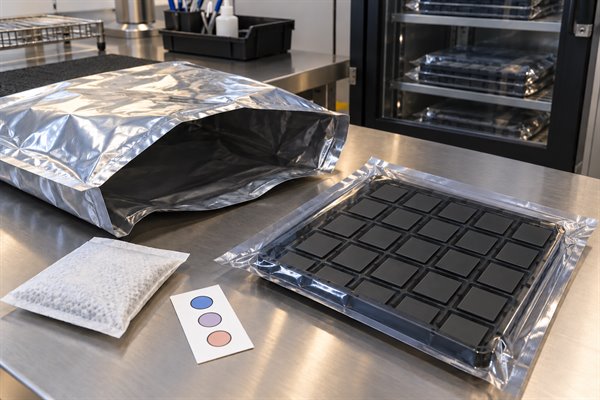
10CL055YF484I7G is an MSL 3 device supplied in trays, with a stated floor life of 168 hours at no more than 30°C and 60% relative humidity.
When the material arrives, check:
- Moisture-barrier seal: Look for punctures, damage, or evidence that the bag was previously opened.
- Exposure history: Confirm the opening time and cumulative floor exposure when that information is available.
- Moisture indicators: Review the humidity indicator card and desiccant condition when supplied.
- Tray condition: Check for broken trays, displaced devices, contamination, or handling damage.
- Assembly timing: Plan placement and reflow within the remaining allowable floor life.
Altera’s product record states a shelf-life duration of 1,092 days. This is a manufacturer product-data field, not the remaining shelf life of every available lot. The receiving decision should consider the manufacturing date, packaging condition, storage history, and moisture-control evidence for the actual shipment.
How Should You Request and Review a 10CL055YF484I7G Quote?
A first RFQ only needs your quantity, date code requirement, and delivery location.
These details allow the supplier to identify relevant sourcing options without making the initial request unnecessarily complicated:
- Quantity: State the number of units required.
- Date code requirement: Specify the acceptable date-code condition.
- Delivery location: Provide the destination country or city.
When the quotation arrives, check that it confirms:
- Exact device: The quoted OPN is 10CL055YF484I7G.
- Deliverable quantity: The quotation distinguishes physical stock from incoming or factory supply.
- Lot information: Available date code and lot details meet the stated requirement.
- Commercial terms: Unit price, quotation validity, lead time, and delivery terms are clear.
- Evidence scope: Any agreed inspection or traceability documents are identified.
- Order consistency: The quotation, package labels, delivered devices, and shipping records can be matched to the same order.
Compare these details with the approved BOM and purchasing requirements before issuing the purchase order. If a suffix, quantity, lot condition, delivery date, or evidence requirement does not match, request a corrected quotation or written clarification first.
Send Melson Components your quantity, date code requirement, and delivery location to sales@melsonchip.com for a quotation.