 English
 中文
 english


A genuine-looking XC7Z020-2CLG400I cannot be authenticated from its top marking or packaging alone. A reliable check combines ordering-code verification, marking inspection, packaging and label comparison, date code and lot code review, physical inspection, and testing appropriate to the sourcing risk.
The most useful rule is consistency. The physical device, labels, packaging, batch information, pre-shipment evidence, inspection results, and delivered material should describe the same batch. When one part of that evidence does not match, identify the reason before accepting the components.
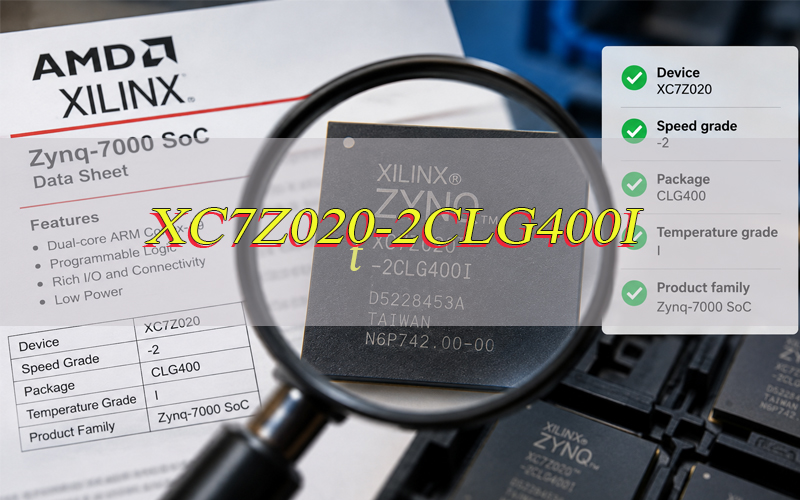
What XC7Z020-2CLG400I Details Should You Cross-Check Against the Datasheet?
Start by confirming the exact ordering code before looking for counterfeit indicators. XC7Z020 devices can belong to the same Zynq-7000 family while differing in speed grade, package, or temperature grade, so confirming only “XC7Z020” is not enough.
| Item | Expected Detail | What to Verify |
|---|---|---|
| Device | XC7Z020 | The supplied device matches the required device |
| Speed grade | -2 | The required speed grade has not been substituted |
| Package | CLG400 | The component uses the required 400-ball BGA package |
| Temperature grade | I | The requested industrial grade is supplied |
| Product family | Zynq-7000 SoC | The device belongs to the correct product family |
The complete suffix matters. If the quotation, device marking, or package label shows another speed grade, package, or temperature grade, do not treat it as an equivalent part unless the substitution has been reviewed and approved.
If you want to know more about the datasheet of XC7Z020-2CLG400I, please refer to this following pdf files:
What Should You Check on XC7Z020-2CLG400I Part Markings?
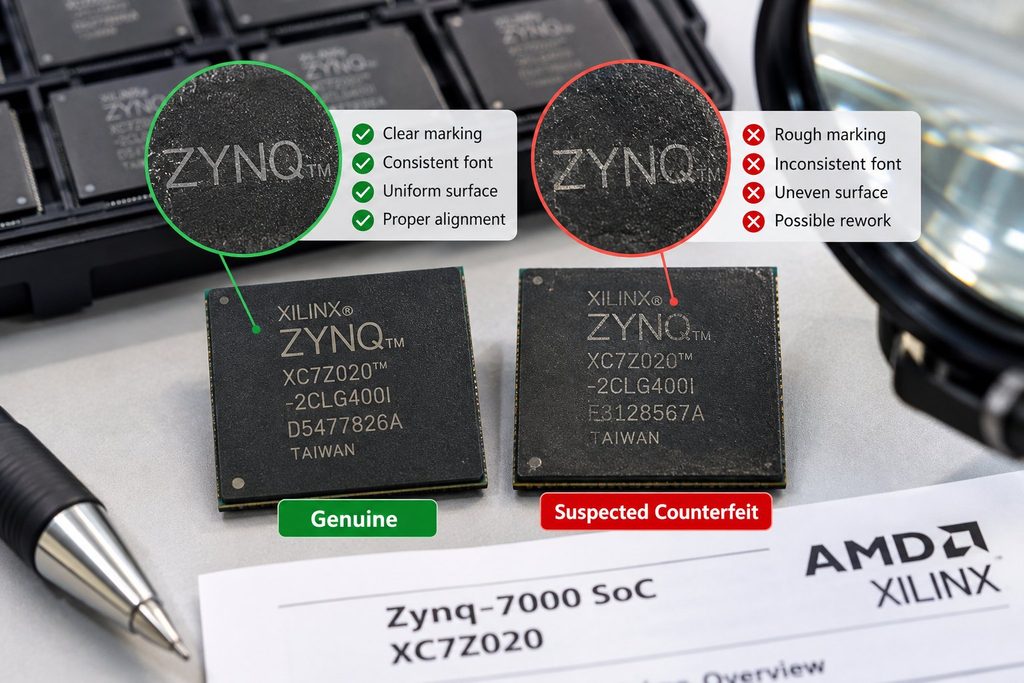
Do not inspect only one component and compare it with an image found online. A more useful method is to sample several devices from the same claimed lot and compare them with one another first. Devices from a consistent batch should not show unexplained differences in marking style or package surface.
Check these areas:
- Character shape and spacing: Look for unusual differences in letter form, height, spacing, or alignment.
- Marking position: Major shifts between devices from the same claimed lot deserve closer review.
- Laser appearance: Compare depth, sharpness, contrast, and consistency across several samples.
- Surface around the marking: Sanding, polishing, coating, or a different texture may indicate removal of a previous marking.
- Batch-to-batch consistency: Do not assume every legitimate production period must look identical, but unexplained differences within one claimed lot are more significant.
If three or four devices from the same lot show different surface textures or noticeably different marking depth, do not immediately call them counterfeit. First determine whether the samples belong to different production lots. If the supplier represents them as one lot and cannot explain the variation, move the samples to higher-magnification inspection or additional testing.
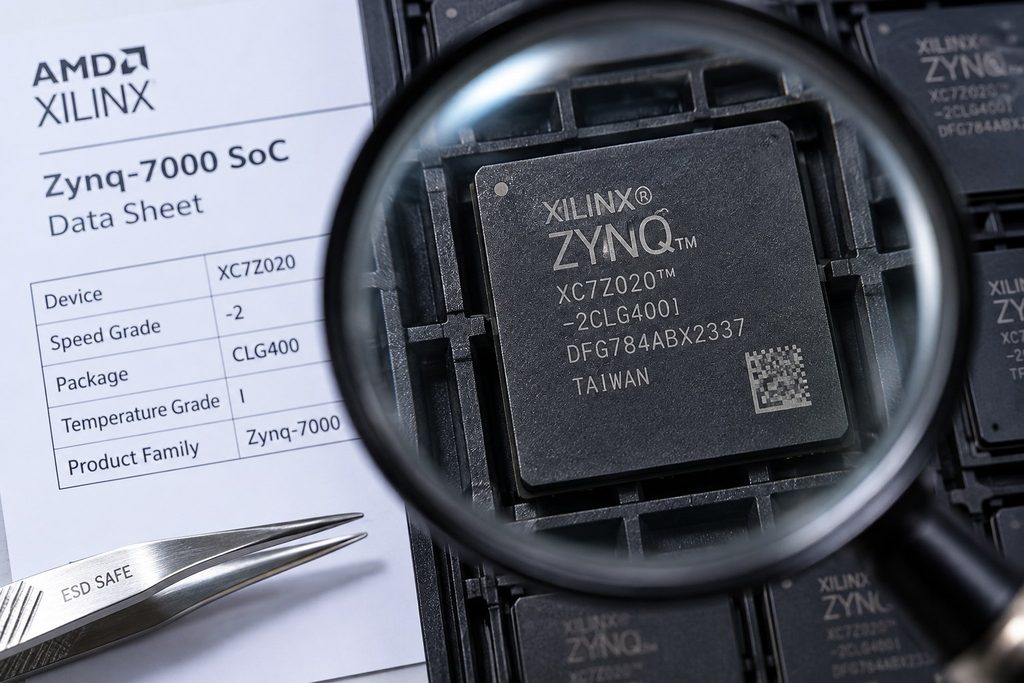
Can XC7Z020-2CLG400I Packaging and Labels Reveal Counterfeit Parts?
Packaging is useful because it creates another evidence layer outside the component itself. The outer carton, moisture barrier bag, trays, labels, quantity, and devices should all describe the same material.
Compare the part number, quantity, date code, lot code, and package information across the available packaging. Pay particular attention when the same batch is represented by several different labels or containers.
Warning signs include:
- A new label applied over an older label
- Part numbers that differ between the label and the device
- Quantity that does not match the actual tray count
- Different label styles within a shipment represented as one lot
- Damaged or resealed moisture barrier packaging
- Trays that do not properly fit the BGA package
- Missing batch information despite a claim of complete traceability
A professionally printed label is not proof of authenticity. Packaging becomes valuable when its information can be tied to the actual devices, the quoted lot, the inspection records, and the delivered shipment.
If the outer label identifies one lot but the device markings indicate several unrelated batches, stop treating the packaging as independent proof. The mismatch itself becomes the item that needs to be resolved.
How Should You Check Date Code and lot code Consistency?
date code and lot code should be checked as batch-consistency evidence, not as standalone authenticity tests. An older date code does not automatically make a component counterfeit, and more than one date code does not automatically make a shipment unacceptable.
The correct interpretation depends on what was ordered.
- Single-lot requirement: The supplied quantity should correspond to the agreed lot structure. Unexpected date code or marking variation should be investigated.
- Mixed-lot order: Multiple lots can be acceptable when they were disclosed before purchase and meet the agreed acceptance criteria.
- Specific date code requirement: The permitted date code range should be written into the RFQ or purchase requirement before the order is released.
Compare date code and lot code information across:
- Device markings
- Tray labels
- Moisture barrier bags
- Outer carton labels
- Packing lists
- Pre-shipment photographs
- Inspection and testing records
For example, if the quotation states single lot but the shipment contains different date codes, different marking styles, and visibly different surface conditions, do not assess each difference separately. Together they indicate that the supplied material may not match the quoted batch.
Also avoid treating online inventory as batch evidence. A website showing 5,000 units does not prove that 5,000 units from the same lot are physically available. Ask for batch-specific evidence before relying on the listed quantity.
What Physical Signs Can Indicate a Reworked or Remarked XC7Z020-2CLG400I?
A device does not have to contain fake silicon to create an authenticity problem. Genuine components can be removed from used equipment, cleaned, reballed, resurfaced, remarked, or represented under a grade or condition different from their actual history.
Inspect the package under controlled lighting and magnification for:
- Sanding or polishing marks
- Unusual surface coating or blacktopping
- Different texture between the package top and edges
- Residue near package edges
- Scratches inconsistent with normal tray handling
- Evidence of previous solder exposure
- Uneven, oxidized, or contaminated solder balls
- Signs of reballing
- Markings applied over an altered surface
Because XC7Z020-2CLG400I uses a BGA package, the solder-ball area is especially useful when looking for previous assembly or rework. Ball shape, contamination, surface condition, and residue can reveal handling that is not obvious from the top side.
A reballed device is not automatically counterfeit. The problem is representation. If a previously assembled and reballed component is sold as new unused material, the delivered condition does not match the purchase requirement.
When you find one abnormal feature, document it and compare more samples from the same lot. When several abnormal features appear together, escalate the batch rather than relying on visual judgment alone.
What Counterfeit Risks Are Common With XC7Z020-2CLG400I?
XC7Z020-2CLG400I sourcing can involve several different risks. The problem is not always a completely fake device; genuine silicon can also be misrepresented by grade, condition, or batch history.
- Remarked parts: A genuine or different device may be relabeled as XC7Z020-2CLG400I or represented as another speed or temperature grade.
- Refurbished parts: Previously used components may be cleaned, resurfaced, or recoated and then represented as new material.
- Reballed parts: BGA devices may have been removed from previous assemblies and fitted with new solder balls before resale.
- Mixed lots: Devices from different production batches may be combined while being presented as one consistent lot.
- Incorrect speed or temperature grades: A device from the XC7Z020 family may be represented as the required -2 industrial-grade part even when the actual grade is different.
- Used parts sold as new: A device may still pass limited functional testing while having an unknown previous operating, thermal, or rework history.
A component can therefore contain genuine silicon and still fail the purchase requirement because its grade, condition, batch history, or previous use was misrepresented.
Is Visual Inspection Enough to Confirm XC7Z020-2CLG400I Authenticity?
No. Visual inspection can identify obvious signs of remarking, rework, or previous use, but it cannot confirm the internal die or all ordering-code attributes.
Visual inspection is useful for checking:
- Top-marking consistency
- Surface sanding, coating, or blacktopping
- Package damage or contamination
- Signs of reballing
- Differences between devices from the same claimed lot
- Evidence of previous soldering or use
If the markings, package surface, solder balls, labels, date code, lot code, and traceability records are consistent, the batch may pass the agreed visual inspection stage.
Further testing is appropriate when the visual evidence leaves a specific question unresolved:
- Use X-ray when BGA condition or internal package structure looks questionable.
- Use De-Cap when the internal die identity needs stronger verification.
- Use electrical testing when specific electrical characteristics need to be checked.
- Use functional testing when the device must demonstrate defined operating functions.
Visual inspection should therefore be treated as the first screening step, not final proof of authenticity. Suspicious findings should determine which additional test is required.
Which Tests Can Help Detect Counterfeit XC7Z020-2CLG400I Parts?
Testing should be selected according to the specific concern found during document review and visual inspection. Running every available test is not necessarily more useful than choosing the correct test for the suspected problem.
| Test | What It Can Check | When It Is Useful |
|---|---|---|
| High-resolution visual inspection | Marking, package surface, solder-ball abnormalities | First screening layer for most lots |
| X-ray inspection | Internal construction, BGA condition, structural differences | When internal or BGA consistency is questionable |
| XRF testing | Elemental composition of selected materials | When plating or material composition requires comparison |
| De-Cap inspection | Internal die markings and die structure | When die identity requires stronger verification |
| Electrical testing | Selected electrical characteristics | When specific electrical behavior must be checked |
| Functional testing | Operation under defined conditions | When device operation must be verified before acceptance |
What Evidence Should You Request Before Ordering XC7Z020-2CLG400I?
Before placing an order, request evidence linked to the actual batch being quoted, not generic stock photos or website inventory.
Ask for:
- Actual device photos: Clear images of the top marking and package condition.
- Packaging photos: Tray, moisture barrier bag, outer carton, and top label where available.
- date code and lot code: Confirm whether the quoted quantity is from a single lot or mixed lots.
- Quantity confirmation: Verify that the available quantity matches the batch shown in the photos and labels.
- Traceability records: Check what sourcing, inspection, packing, or shipment records can be linked to the batch.
- Inspection and testing scope: Confirm whether visual inspection, X-ray, De-Cap, electrical testing, or functional testing is included or available.
- Acceptance criteria: Define what will cause the lot to pass, require further testing, or be rejected.
Any non-negotiable requirement should be written into the RFQ before the purchase order is released. If the project requires the CLG400 package, -2 speed grade, industrial temperature grade, a specific date code range, or single-lot supply, state those requirements clearly and specify no substitution where applicable.
What Should You Inspect Before Accepting an XC7Z020-2CLG400I Shipment?
Before releasing the shipment, confirm that the received material matches the batch approved before purchase. Cross-check the purchase order, packing list, labels, quantity, date code, lot code, physical devices, and test records.
If the shipment contains multiple trays, sample across the lot and check:
- Part-marking consistency: Compare font, alignment, laser quality, and marking position across samples.
- Package condition: Look for sanding, blacktopping, scratches, residue, or other signs of rework.
- date code and lot code consistency: Confirm that the received batch matches the agreed single-lot, mixed-lot, or date code requirement.
- Solder-ball condition: Check for oxidation, contamination, uneven balls, or evidence of reballing.
- Packaging integrity: Inspect the moisture barrier bag, seal, desiccant, and humidity indicator where applicable.
- Quantity and label accuracy: Make sure the tray count, labels, and packing list agree.
- Test report traceability: Confirm that the tested samples can be linked to the delivered lot.
If the devices do not match the approved pre-shipment photos, agreed lot information, or inspection records, hold the batch before production release and resolve the discrepancy.
Do not accept the shipment based only on clean packaging or a test report. The physical devices, batch records, labels, and test evidence should all match the same delivered lot.
FAQs About XC7Z020-2CLG400I Authenticity and Counterfeit Detection
Q1: Can a genuine XC7Z020 device still be incorrectly sold as XC7Z020-2CLG400I?
A1: Yes. A genuine XC7Z020-family device can still be represented with the wrong speed grade, package, or temperature grade. Verify the complete ordering code, not only the device family.
Q2: Is a certificate of conformity enough to prove authenticity?
A2: No. A certificate is useful only when it can be connected to the actual supplied lot, quantity, labels, inspection records, and physical devices. Documentation that cannot be tied to the delivered batch provides limited evidence.
Q3: Should you reject XC7Z020-2CLG400I parts if the markings look different from online photos?
A3: Not automatically. Legitimate marking appearance can vary. Unexplained variation among devices represented as the same lot is more important than a difference from one online photograph.
Q4: Can a functional XC7Z020-2CLG400I still be refurbished or previously used?
A4: Yes. A used or reballed device can still operate during limited testing. Functional performance does not prove that the component is new or that its previous history was correctly represented.
Q5: What should you do if the device marking and package label do not match?
A5: Hold the material and compare the purchase order, device marking, label, date code, lot code, pre-shipment photographs, and traceability records. The discrepancy should be explained before acceptance.
Q6: How many XC7Z020-2CLG400I units should be tested from a lot?
A6: The sampling level should reflect the lot size, source risk, available traceability, application requirements, and test method. Destructive methods such as De-Cap are normally performed on selected samples.
Q7: Can JTAG IDCODE confirm the complete XC7Z020-2CLG400I ordering code?
A7: No. JTAG can provide useful device-identification information, but it does not independently confirm every ordering attribute, including the package, speed grade, and temperature grade.
Q8: Is an unopened moisture barrier bag enough to accept the parts?
A8: No. Packaging integrity is only one inspection point. The part number, labels, quantity, lot information, physical devices, and inspection records should also match the approved batch.
Q9: What does “no substitution” mean when buying XC7Z020-2CLG400I?
A9: It means the requested device, package, speed grade, and temperature grade should not be replaced with another variant unless the buyer approves the change.
Q10: What should you do if the seller cannot provide batch-specific photographs before shipment?
A10: Treat the missing batch evidence as part of the sourcing risk. For higher-value orders, request actual device, label, tray, and packaging photographs tied to the quoted material before deciding whether additional inspection or testing is required.
Conclusion
To determine whether an XC7Z020-2CLG400I is genuine, check datasheet details, part markings, packaging, date code, lot code, physical condition, and test results as one evidence chain. When those records do not describe the same batch, investigate the discrepancy before acceptance. For higher-risk lots, X-ray, De-Cap, electrical testing, or functional testing can provide additional evidence beyond visual inspection.
Melson Components can support visual inspection, X-ray, De-Cap, and functional testing, with RFQ, inspection, packing, and shipping records retained for up to 15 years. For a quotation, send your quantity, date code requirement, and delivery location to sales@melsonchip.com.