 English
 中文
 english


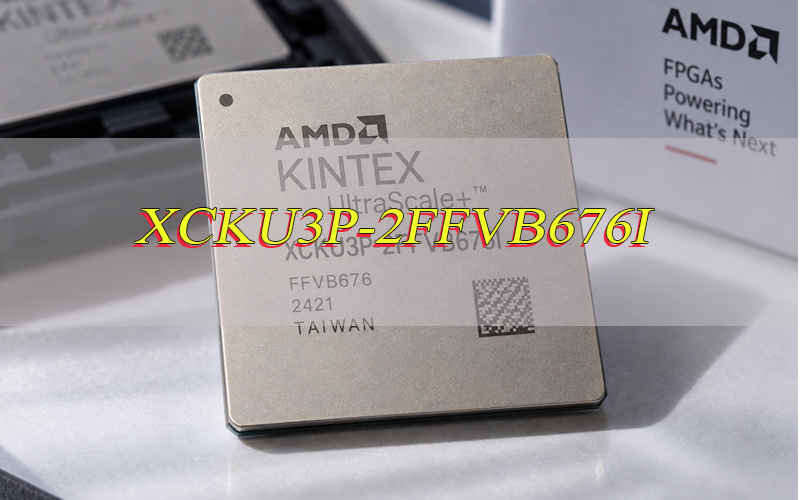
When sourcing XCKU3P-2FFVB676I, price and listed stock are only the starting points. You also need to confirm that the physical lot matches your BOM, date code requirement, packaging condition, traceability standard, and inspection plan before approving the purchase.
XCKU3P is part of the AMD Kintex UltraScale+ FPGA family. AMD lists the -2I configuration as a production grade with 0.85 V nominal VCCINT, while industrial-grade Kintex UltraScale+ devices are specified for a –40°C to +100°C junction-temperature range. The XCKU3P in FFVB676 provides 72 HD I/Os, 208 HP I/Os, and 16 GTY transceiver channels.
What Should You Verify Before Sourcing XCKU3P-2FFVB676I?
Verify the complete XCKU3P-2FFVB676I ordering code against your approved BOM before comparing stock or price. An offer for “XCKU3P” alone does not confirm the required speed grade, package, or temperature grade.
Use the table below to check the device details that should match your existing design.
| Item | Required Value | What You Should Check |
|---|---|---|
| Device | XCKU3P | Matches your approved FPGA |
| Speed Grade | -2 | Same grade used for timing qualification |
| Package | FFVB676 | Same package and pinout |
| Temperature Grade | I | Industrial-grade requirement |
| VCCINT | 0.85 V nominal | Matches the -2I configuration |
| HD I/O | 72 | Supports your assigned HD I/O |
| HP I/O | 208 | Supports your assigned HP I/O |
| GTY Channels | 16 | Covers required high-speed links |
AMD identifies -2I as a production speed/temperature configuration for XCKU3P, and its current package documentation lists 72 HD I/Os, 208 HP I/Os, and 16 GTY channels for XCKU3P-FFVB676.
Do not treat another speed grade, temperature grade, or package as an automatic substitute. If your approved BOM specifies XCKU3P-2FFVB676I, any suffix change should be reviewed by engineering before purchase.
When sourcing XCKU3P-2FFVB676I, price and listed stock are only the starting points. You also need to confirm that the physical lot matches your BOM, date code requirement, packaging condition, traceability standard, and inspection plan before approving the purchase.
XCKU3P is part of the AMD Kintex UltraScale+ FPGA family. AMD lists the -2I configuration as a production grade with 0.85 V nominal VCCINT, while industrial-grade Kintex UltraScale+ devices are specified for a -40°C to +100°C junction-temperature range. The XCKU3P in FFVB676 provides 72 HD I/Os, 208 HP I/Os, and 16 GTY transceiver channels.
How Should You Verify XCKU3P-2FFVB676I Stock Before Placing an Order?
Confirm the physical quantity, date code, lot information, packaging condition, and ship date before treating XCKU3P-2FFVB676I as available stock.
An online listing may show 1,000 pieces, but that does not mean 1,000 pieces are physically available from one lot. The total may be split across several date codes, held by different upstream sources, or include inventory that has not yet been physically verified.
Before approving the purchase, confirm:
- Exact OPN: XCKU3P-2FFVB676I
- Physically available quantity
- date code
- Lot information
- Single-lot or mixed-lot status
- Current tray and label photos
- Packaging condition
- Inspection status
- Confirmed ship date
If you need 500 pieces from one lot, a website showing 800 pieces is not enough. You need confirmation that at least 500 acceptable parts belong to the same lot you intend to buy.
How Should You Check the XCKU3P-2FFVB676I Date Code?
Set your date code requirement before the final quote, then verify it against the physical stock. Avoid vague requests such as “new stock” when your project actually requires a specific production period.
Your purchasing requirement can state:
- Single date code required
- Specific date code range
- Single manufacturing lot required
- Mixed date codes acceptable
- No date code restriction
A date code and a manufacturing lot are not the same thing. Parts carrying the same date code are not necessarily from the same manufacturing lot, so specify “single lot” separately when batch consistency matters.
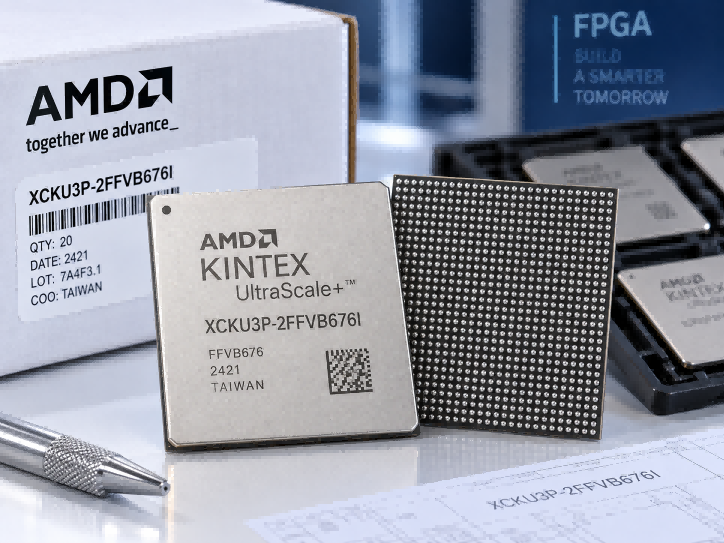
When checking an XCKU3P-2FFVB676I date code, compare the quoted information with the current package label, tray information, device markings where applicable, and inspection evidence. A date code stated in an email or spreadsheet should not override conflicting information on the actual lot.
Do not reject a lot only because the date code is older. A newer date code does not automatically mean lower sourcing risk. An older lot with consistent records, suitable storage, and intact packaging may be easier to evaluate than newer stock with unexplained label or traceability differences.
What Traceability Records Should You Request for XCKU3P-2FFVB676I?
You need records that link the XCKU3P-2FFVB676I you order to the lot that was inspected, packed, and shipped. The value of traceability comes from consistency between records, not from the number of documents supplied.
Use the records below to check whether the same lot can be followed through the purchase.
| Record | What You Should Verify |
|---|---|
| Quote / PO | Correct OPN, quantity, and date code |
| Label Evidence | Matching part number, lot, and quantity |
| Packing Record | Correct lot and packed quantity |
| Inspection Record | Inspection applies to your lot |
| Test Report | Tested samples belong to your lot |
| Shipping Record | Shipment comes from that lot |
Focus on three questions:
- Do the quote, labels, and physical parts match?
- Does the inspection or test report identify the same lot you are buying?
- Can the final shipment be traced back to those inspection and purchasing records?
A generic certificate provides little protection if you cannot connect it to the actual lot. Lot-level consistency is more useful than a large document package with unrelated reference numbers.
How Can You Verify XCKU3P-2FFVB676I Labels and Device Markings?
Compare several devices from the same lot and look for consistency between the device markings, tray labels, date code information, and physical condition. One unusual font or logo should not be used as the sole basis for an authenticity decision.
Check the following together:
- Full device identification
- Speed grade and package information
- Date and lot information where shown
- Logo and marking layout
- Consistency across sampled devices
- Surface condition around the marking
- Package edges and corners
- Signs of previous handling or rework
- Device information versus tray label
Pay closer attention when devices claimed to be from one lot show noticeably different marking styles, unexplained laser-marking differences, unusual package-surface texture, or information that conflicts with the tray label.
These signs do not prove that a device is counterfeit on their own. They are reasons to stop approval and ask for stronger traceability, broader sampling, or additional testing.
What Packaging Should You Check Before Accepting XCKU3P-2FFVB676I?
Check the physical packaging, moisture protection, and lot consistency before accepting XCKU3P-2FFVB676I for production use.
Focus on three areas:
- Physical condition: Check trays, bags, seals, labels, visible damage, and signs that the stock has been opened or repacked.
- Moisture protection: Where moisture-barrier packaging is used, check the sealing condition and supplied moisture-control materials. If the parts have been repacked, ask how they were stored and handled before resealing.
- Lot consistency: Compare the outer label, inner label, tray information, quantity, date code, and lot number. If several trays are described as one lot, their identifying information should support that claim.
For a high-value order, ask for current photos of the outer package, sealed inner package, complete tray, and labels. These give you a clearer view of the actual lot than a close-up photograph of one FPGA.
What Should You Check in an XCKU3P-2FFVB676I Pre-Shipment Inspection?
Before shipment, confirm that the exact lot you are buying matches your PO, packaging requirement, and acceptance criteria.
Step 1: Check Identity
Verify XCKU3P-2FFVB676I, quantity, date code, and lot information against your approved order.
Step 2: Check Packaging
Confirm the tray, labels, sealing condition, quantity, and any agreed single-lot or date code requirements.
Step 3: Check Device Condition
Review sampled devices for package damage, contamination, abnormal surface condition, marking differences, and visible BGA abnormalities.
Step 4: Check Record Consistency
Make sure the inspection report, photos, labels, and packing information all refer to the lot you will actually receive.
Do not release the shipment without clarification if you find:
- Wrong OPN
- Unapproved mixed lots
- Conflicting date codes
- Label and device mismatch
- Unexplained marking variation
- Damaged BGA packages
- Incomplete traceability
- Packaging outside your agreed condition
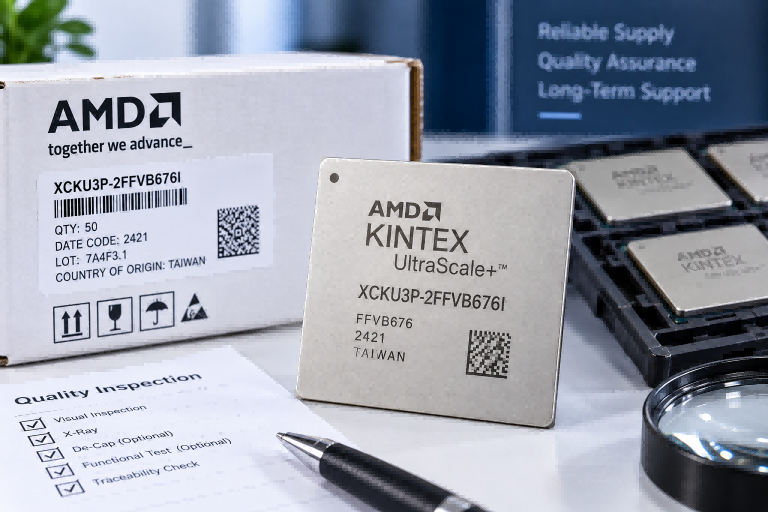
Your inspection record should identify the lot, sample quantity, inspection items, findings, and disposition. A report stating only “visual inspection passed” gives you little evidence if a quality question appears later.
When Are X-Ray, De-Cap, or Functional Tests Needed for XCKU3P-2FFVB676I?
Use deeper testing when source history, inspection findings, order value, or application risk cannot be addressed through documentation and visual inspection alone.
Each method answers a different question. The table below helps you match the test method to the concern you are trying to resolve.
| Method | What It Helps You Check | What It Cannot Confirm Alone |
|---|---|---|
| Visual Inspection | Markings, package condition, obvious rework | Internal die identity |
| X-Ray | Internal package structure and BGA anomalies | Full electrical performance |
| De-Cap | Die-level examination | Performance of the entire lot |
| Functional Test | Defined electrical or device functions | Long-term reliability |
Use X-Ray when you need non-destructive information about internal package structure or BGA-related conditions that cannot be checked externally. A normal X-Ray result adds evidence, but it should not be treated as complete proof of authenticity.
Consider De-Cap when die-level examination is justified by the value or risk of the order. Because it is destructive, it is normally performed on selected samples.
For functional testing, define the test conditions and acceptance limits before testing starts. A limited electrical screen is not the same as validating the FPGA in your complete PCIe, Ethernet, DSP, or data-acquisition system.
What Should Be Included in an XCKU3P-2FFVB676I RFQ?
An XCKU3P-2FFVB676I RFQ should clearly define the part, quantity, date code, lot, delivery, packaging, inspection, and testing requirements that determine whether the offered stock is acceptable. Giving each source the same requirements also makes it easier to compare offers without relying only on unit price.
Include the following information:
- Exact part number: Specify XCKU3P-2FFVB676I rather than XCKU3P alone. This avoids confusion over the speed grade, package, or temperature grade.
- Quantity: State the number of pieces required and whether partial quantities are acceptable.
- date code requirement: Define whether you require a specific date code range, a single date code, or have no date code restriction.
- Lot requirement: State whether the quantity must come from one manufacturing lot or whether mixed lots are acceptable.
- Delivery location: Provide the destination country or delivery location so shipping arrangements can be evaluated correctly.
- Required delivery date: State when the parts need to arrive, not only when you want them to ship.
- Packaging requirement: Specify whether original or sealed packaging is required and identify any packaging condition that would make the lot unacceptable.
- Photo requirements: Request current photos of labels, trays, outer packaging, or sealed inner packaging when physical stock verification is required.
- Inspection scope: Define the visual, marking, packaging, dimensional, or other inspection checks you expect before shipment.
- Testing requirement: Specify whether X-Ray, De-Cap, functional testing, or another agreed test is required and define the sample quantity where applicable.
- Acceptance criteria: State the conditions the lot must meet before shipment approval, especially for date code, lot consistency, packaging, traceability, and inspection results.
For an initial inquiry, you can start with Quantity + date code requirement + Delivery Location. Once suitable stock has been identified, add any single-lot, packaging, photo, inspection, testing, and acceptance requirements that apply to your project.
This keeps the RFQ clear without overloading the first inquiry, while still giving you enough information to verify the actual XCKU3P-2FFVB676I lot before purchase.
Why Source XCKU3P-2FFVB676I Through Melson Components?
When sourcing XCKU3P-2FFVB676I, you need to know whether the actual lot meets your requirements for date code, traceability, packaging, inspection, and testing. Melson Components supports that review through testing capabilities, documented sourcing records, controlled supply channels, and long-term traceability.
- In-house testing support: You can request visual inspection, X-Ray, De-Cap, LCR, and functional testing according to your acceptance criteria. The inspection scope can be selected according to the specific sourcing risk rather than automatically applying every test.
- 15-year traceability records: RFQ, sourcing, inspection, packing, and shipment records can be retained for up to 15 years, helping you trace the supplied lot if a quality question arises later.
- Controlled supplier network: When your required quantity, date code, or lot is difficult to source, available options can be reviewed with supplier qualification, sourcing records, and lot-level evidence rather than relying only on an online stock figure.
- 20+ years of industry experience: Melson Components can support sourcing decisions involving availability, EOL exposure, supply continuity, date code requirements, and substitution risk.
For an XCKU3P-2FFVB676I quote, send your quantity, date code requirement, delivery location to sales@melsonchip.com.
If your project requires a single lot, current label or packaging photos, a defined inspection plan, X-Ray, De-Cap, functional testing, or other acceptance criteria, include those requirements in the RFQ so the actual lot can be reviewed before purchase approval.
FAQs About XCKU3P-2FFVB676I Sourcing
Q1. Can I use XCKU3P with the free Vivado BASIC tier?
A1. Check the exact Vivado version and current AMD device-support matrix before choosing a license. AMD changed Vivado to a tier-based licensing model in 2026.1. The BASIC tier remains free, but newer versions may have different licensing requirements from older Vivado releases.
Q2. Can I use XCKU3P-FFVB676 for a PCIe design?
A2. Yes, but device support alone does not make an existing PCIe design compatible. You still need to verify GTY allocation, PCIe block use, reference clocks, lane routing, IP configuration, and board constraints before committing to the device.
Q3. How many GTY transceivers does XCKU3P-FFVB676 provide?
A3. XCKU3P-FFVB676 provides 16 GTY transceiver channels. The device and package combination also provides 72 HD I/Os and 208 HP I/Os.
Q4. Can I replace FFVB676 with another XCKU3P package without redesigning my PCB?
A4. Do not assume so. Different XCKU3P package options can have different footprints, ball assignments, available I/O, and package characteristics. Any package change should be checked against the schematic, PCB layout, power design, and FPGA constraints.
Q5. Can I replace XCKU3P-FFVB676 with XCKU5P-FFVB676?
A5. Sharing the FFVB676 package does not make XCKU5P an automatic functional replacement. You still need to check resources, power requirements, timing, pin use, GT allocation, constraints, and the Vivado project before changing devices.
Q6. Should I accept a pulled or reballed XCKU3P for production?
A6. Treat reclaimed or reballed devices as a different sourcing condition from unused stock. Previous board use, removal, reballing, storage, and additional thermal cycles create a history that may matter to your qualification requirements. Unused stock and reclaimed material should be clearly distinguished before purchase.
Q7. If the FPGA programs successfully, can I assume it meets the -2I specification?
A7. No. Successful configuration confirms that the device can communicate and load a bitstream under the test conditions. It does not independently prove compliance with the timing and temperature specifications associated with the -2I grade.
Q8. Should I reject XCKU3P stock simply because the price is unusually low?
A8. No. Surplus inventory, equipment liquidation, and reclaimed hardware can create large price differences in the secondary market. A low price should trigger closer verification of lot history, packaging, traceability, and part condition rather than an automatic conclusion about authenticity.