 English
 中文
 english


Counterfeit or refurbished XC7Z015-2CLG485I devices can be difficult to identify from the top marking alone. A part may look genuine while carrying a remarked surface, reballed BGA, mismatched package label, inconsistent date code, or incorrect internal device identity.
To verify an XC7Z015-2CLG485I, compare the complete order code, package dimensions, top marking, 2D barcode, date and lot information, packaging, and supplier traceability. When visual evidence is not enough, X-ray, device identification, or functional testing can help determine whether the device matches the part that was ordered.
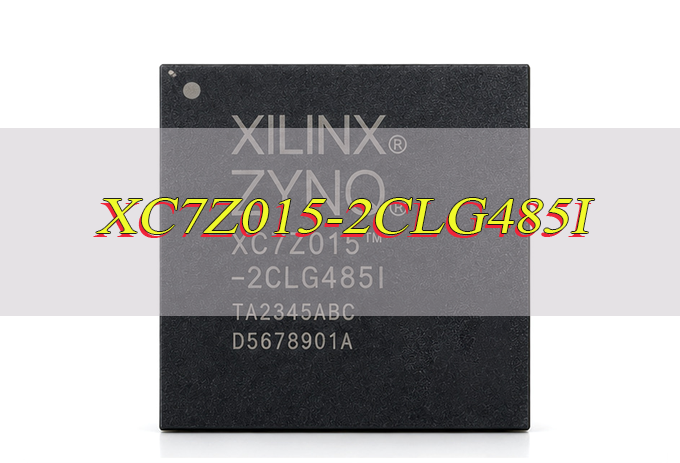
What Details Should Match on a Genuine XC7Z015-2CLG485I?
A genuine device should match the ordered identity across the part, package, labels, and records. Read XC7Z015 / -2 / CLG485 / I as the device, speed grade, package, and temperature grade, then verify each field against the physical package, device lookup, purchase order, and lot labels.
| Identity field | Expected baseline |
|---|---|
| Device | XC7Z015, a Zynq-7000 SoC device |
| Speed grade | -2 |
| Package | CLG485 wire-bond chip-scale BGA |
| Pb-free code | The G in CLG denotes the RoHS 6/6 package option |
| Temperature grade | I, industrial junction-temperature range of -40°C to +100°C |
| Package geometry | 19.00 mm × 19.00 mm body, 0.80 mm pitch |
CLG485 is the package designator, while AMD’s mechanical drawing specifies 484 solder balls; these two values are not contradictory. Confirm the device identity by checking the complete OPN, 19.00 mm package size, 0.80 mm ball pitch, and documented ball layout against the device, package labels, and inspection records.
For additional verification, please refer to the attached XC7Z015-2CLG485I datasheet PDF to confirm the device family, -2 speed grade, CLG485 package, industrial temperature range, electrical specifications, and package dimensions.
What Types of Counterfeit or Refurbished XC7Z015-2CLG485I Should You Watch For?
Counterfeit and refurbished parts usually fall into five risk patterns, and each leaves a different evidence trail. Identifying the likely pattern directs attention to the most useful marking, condition, packaging, X-ray, or electrical checks.
- Remarked or wrong-grade device: another Zynq device, speed grade, package, or temperature grade is resurfaced and marked as XC7Z015-2CLG485I. The most useful evidence is the surface finish, laser-mark geometry, 2D/device lookup, and electrical device identification.
- Reclaimed or reballed BGA: a part removed from a used board is cleaned, reballed, and sold as new. Check ball height and roundness, flux residue, substrate edges, surface wear, and X-ray construction for signs of previous assembly or rework.
- Mixed or substituted lot: one shipment contains devices from different identities, conditions, or sources under a common label. Compare marking style, date and lot data, barcode behavior, surface condition, and X-ray pattern across trays rather than inspecting only the first unit.
- False or mismatched packaging: plausible devices are paired with copied labels, altered quantities, duplicate identifiers, or seller paperwork with no upstream chain. Focus on the LPN or barcode, label hierarchy, quantity reconciliation, repacking explanation, and upstream documents.
- Wrong-die or nonconforming device: the package and mark look credible, but the internal construction or electrical identity does not match the ordered Zynq device. X-ray comparison and device-level electrical identification are more informative than cosmetic appearance.
A lot may fit more than one pattern, for example, reclaimed devices can also be resurfaced and placed in false packaging. Record and resolve each anomaly separately; a clean top mark cannot excuse reball evidence or mismatched labels.
How Can You Check the XC7Z015-2CLG485I Top Marking?
A genuine XC7Z015-2CLG485I does not always use exactly the same visible marking format. AMD/Xilinx marking formats have changed over time, so the goal is not to look for one fixed layout. Instead, confirm that the marking format, package orientation, barcode information, and shipment records remain consistent with the ordered device.
Legitimate variation can include:
- a legacy Xilinx-branded marking, full 2D-barcode marking, or simplified 2D-barcode format;
- an optional family logo;
- changes in the position or arrangement of the 2D code and human-readable marking lines; and
- some device, package, date-code, lot, speed-grade, or temperature information being omitted from the visible top-side text and instead verified through the 2D barcode, device lookup, or applicable package label.
These differences should not be treated as counterfeit evidence by themselves. The marking should be evaluated against the device generation, package documentation, date and lot information, and available AMD/Xilinx lookup data.
Signs that warrant further verification include:
- noticeable differences in font shape, character spacing, laser quality, or 2D-code definition among devices represented as the same lot;
- sanding marks, ghost characters, coating boundaries, or localized matte/gloss changes that may indicate resurfacing or remarking;
- a pin-1 indicator or marking orientation that does not agree with the official CLG485 package orientation;
- different marking formats within one shipment that cannot be explained by date code, lot history, production changes, or documented marking revisions; or
- a 2D-device lookup, package label, or order-code record that identifies a device other than XC7Z015-2CLG485I.
Do not classify a device as counterfeit from font style or surface appearance alone. Photograph several units from the lot under both diffuse and angled lighting, compare them with a traceable reference where possible, and check whether the 2D code, package label, purchase records, and full OPN tell the same story.
When the device and marking format support it, use the AMD/Xilinx device lookup to verify the encoded information. A missing lookup result does not automatically prove counterfeiting, but a lookup result that identifies a different device is a much stronger indication of an identity mismatch.
What Physical Signs Can Reveal a Remarked or Refurbished XC7Z015-2CLG485I?
Remarking and previous assembly often leave repeatable changes in the package surface, substrate edges, or solder balls. Compare several units and a qualified reference so that an isolated cosmetic variation does not become a false verdict.
- Surface preparation: directional abrasion, microblasted texture, local matte/gloss differences, ghost marking, coating boundaries, or coating that runs across package features can indicate resurfacing.
- Marking quality: compare character baselines, stroke width, laser depth, spacing, 2D-code cell edges, and pin-1 placement. Random blur or inconsistent depth across one declared lot deserves closer review.
- Package and substrate edges: chipped corners, scratches, tool marks, edge discoloration, damaged solder mask, and contamination may indicate removal or rough handling.
- BGA geometry: compare ball height, diameter, roundness, pitch, surface finish, color, and coplanarity. Flux residue, solder smears, mask damage, missing balls, or irregular reball patterns are condition evidence.
- Lot consistency: unexplained changes in surface texture, substrate color, mark layout, ball finish, or wear require segregation and comparison rather than averaging all samples into one result.
The 19.00 mm body and 0.80 mm ball pitch provide useful dimensional checks for CLG485. Matching dimensions support the package review but do not prove authenticity; a material deviation or a cluster of condition anomalies justifies quarantine and expanded analysis.
How Can Packaging and Labels Help Verify XC7Z015-2CLG485I Authenticity?
Packaging supports authenticity only when its information connects the device to the tray or bag, box, shipping records, and declared condition. Reconcile that chain in four steps:
- Confirm the exact OPN: the relevant bag and box labels must resolve to XC7Z015-2CLG485I, not only XC7Z015 or CLG485.
- Connect every packaging level: device, tray or bag, internal box, packing list, and invoice should point to the same explained lot structure. Scan the LPN or manufacturer identifier where supported.
- Reconcile quantity and repacking: label quantities, tray count, shipped count, and any split or repacked quantity must agree. A controlled partial pack can be legitimate, but its upstream identity must remain traceable.
- Compare condition with the declaration: seals, ESD-safe materials, trays, desiccant or humidity evidence where applicable, and device condition should be compatible with a claim of new and unused stock.
AMD’s packaging guide lists a maximum of 84 CLG485 devices per tray and 420 per internal box. These figures are useful reconciliation references, not authenticity thresholds: partial trays and repacked quantities require an explanation rather than automatic rejection.
Over-labels, adhesive residue, inconsistent print density, cropped graphics, duplicate serial data, altered fields, or unrelated barcode data require escalation. A polished label cannot resolve reballing, resurfacing, or an unexplained break between the device and shipment records.
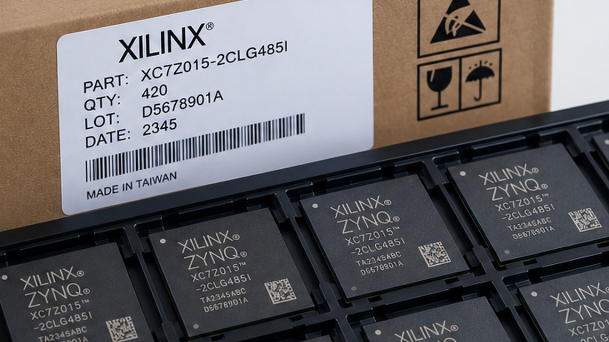
How Should You Check XC7Z015-2CLG485I Date Code and Lot Information?
Old or mixed date codes are not automatic evidence of counterfeiting. The real concern is whether device, packaging, chronology, quantity, and lookup data form a traceable and technically plausible lot history.
- An old date code does not by itself mean counterfeit. It raises questions about storage, moisture control, solderability, prior use, and the exact OPN’s current lifecycle status.
- Mixed date or lot codes do not by themselves mean counterfeit. AMD/Xilinx has documented shipments grouped by device performance rather than strict control of every lot or date code.
- An unexplained contradiction is the real warning. Device and packaging identifiers that cannot be mapped together, impossible chronology, duplicate serialized codes, or lookup information that conflicts with the OPN require quarantine.
Record the device code, visible date and lot text, bag and box labels, LPN, invoice lot, and quantities exactly as received. Group the shipment by tray or bag before sampling, then ask the supplier to explain mixed sources, repacking, older inventory, and any break in custody.
Mixed codes require a traceable explanation, not automatic rejection or acceptance. If the supplier cannot document why the codes differ and how they map to the shipment, keep the affected lot quarantined.
What Traceability Documents Should You Request for XC7Z015-2CLG485I?
Every purchase needs records that identify the exact part, quantity, condition, lot, packaging, and source route. Independent-channel or high-reliability orders need a second evidence tier covering sampling, test data, handling, and failure disposition.
Minimum records for every purchase
- Transaction identity: quotation, purchase order, invoice, and packing list showing manufacturer, exact OPN, quantity, declared condition, source route, and packaging.
- Lot and date mapping: records that connect the shipped trays or bags to their date, lot, LPN, and quantities.
- Upstream traceability: manufacturer or authorized-distributor documents when available, or an explained invoice and custody chain for an independent source.
- Certificate of conformance: the issuer, covered lot, declared condition, and actual basis of the certificate. A seller-issued CoC is not equivalent to manufacturer pedigree.
- Lot photographs: original-resolution images of labels, seals, trays, top marks, pin-1 corners, substrate edges, and representative BGA fields before shipment.
Additional records for elevated-risk lots
- Inspection and sampling plan: sample selection, equipment, reference sample, features measured, acceptance limits, and escalation after one anomaly.
- Raw test evidence: original X-ray or XRF files where applicable, sample IDs, test conditions, results, failures, and links to the shipped lot.
- Equipment and handling evidence: relevant calibration status, repacking, dry-pack, bake, ESD, storage, and return history.
- Failure disposition: quarantine and nonconformance records showing how failed or returned devices were segregated from saleable stock.
State the required records and acceptance criteria in the RFQ or purchase order. Accept “tested” only when the supplier identifies the samples, method, reference, limits, results, and connection to the offered lot.
What Non-Destructive Tests Can Help Verify a Suspect XC7Z015-2CLG485I?
No nondestructive test can prove identity, condition, and source on its own. Choose each method for a specific unresolved question, and record what the result can establish and what still requires another check.
- External visual inspection: can confirm marking geometry, surface finish, package dimensions, pin-1 orientation, and BGA condition against the inspection baseline. It cannot confirm the internal die or the complete speed and temperature grade.
- 2D-code and device lookup: can connect a supported serialized identifier to device properties and expose an OPN conflict. It cannot prove unused condition, storage history, or an unbroken chain of custody.
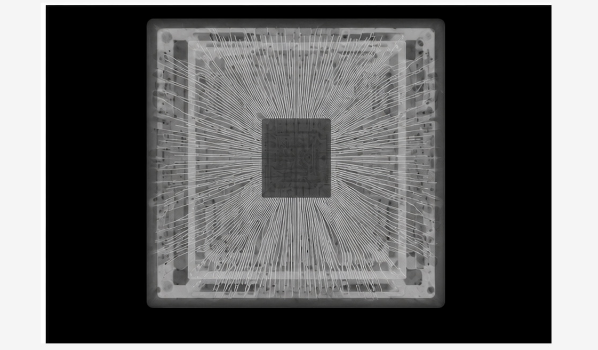
- Radiographic X-ray: can compare die position, wire-bond pattern, package construction, foreign material, internal damage, and solder-ball structure. It cannot by itself prove the full speed or temperature suffix, functional limits, or source pedigree.
- X-ray fluorescence: can compare elemental composition, coating, and solder-finish consistency. It cannot identify the die or establish that the device has never been used.
- Scanning acoustic microscopy: can reveal delamination, internal cracking, and abnormal interfaces associated with thermal or mechanical damage. It cannot determine the exact device identity or commercial source.
- JTAG or electrical device identification: can expose a wrong device by reading expected device-identification data and, where supported, device-specific information. It cannot alone prove the marked speed grade, temperature grade, unused condition, or pedigree.
- Functional or parametric screening: can confirm selected functions under defined voltage, clock, temperature, and I/O conditions. It cannot prove untested limits or erase structural, condition, or traceability anomalies.
Choose a known-good comparison unit from the manufacturer or an authorized channel, using the same exact OPN and, where practical, a comparable marking era and package revision. A generic FPGA or a different Zynq package is a weak X-ray or surface reference.
When evidence conflicts, quarantine first and resolve the specific contradiction. A successful functional test does not overrule a different device ID or an unexplained X-ray pattern. A valid-looking label does not overrule clear reball evidence. A clean top mark does not overrule a barcode result for another OPN.
If nondestructive methods cannot resolve a high-consequence contradiction, define the sample count and authorization for coating analysis or De-Cap before testing begins. Destructive analysis should answer the remaining identity question without consuming the only evidence or unapproved units.
Where Can You Source Genuine XC7Z015-2CLG485I With Traceability and Verification Support?
The lowest-risk supply path is AMD or an AMD-authorized distributor. When that route cannot meet the requirement, a qualified independent source must compensate with disclosed sourcing, lot-level traceability, and a defined inspection plan; a seller declaration alone is insufficient.
- Manufacturer or authorized channel: the lowest-risk route because the chain is manufacturer-backed. Use the AMD-authorized distributor list and confirm current availability for the exact OPN.
- Qualified independent source: acceptable when availability or schedule requires it, provided the supplier discloses the source route, preserves upstream records, and applies a lot-specific inspection and test plan.
- Seller declaration only: the highest-risk route. A statement that parts are “genuine” without lot-level traceability, original evidence, or defined verification does not support a release decision.
For independent sourcing, Melson Components can support XC7Z015-2CLG485I procurement with traceability and inspection services tailored to the offered lot. Available verification support may include visual inspection, X-ray, De-Cap, and functional testing when required, together with retained sourcing, inspection, packing, and shipment records.
Ready to request a quote for XC7Z015-2CLG485I? Contact Melson Components at sales@melsonchip.com with your required quantity, acceptable date code, and delivery location. Include any source restrictions, packaging requirements, traceability needs, or verification tests so the quotation can be prepared around the actual lot and your sourcing requirements.
FAQs About XC7Z015-2CLG485I Counterfeit Detection
Q1: Can a genuine XC7Z015-2CLG485I still carry a Xilinx logo?
A1: Yes. A legacy Xilinx-branded top mark can be legitimate. Judge the complete marking format, device lookup, package, lot evidence, and source history rather than treating the logo alone as a pass or fail.
Q2: Why does CLG485 have 484 solder balls?
A2: CLG485 is the AMD/Xilinx package designator, not a literal ball-count statement. AMD’s official mechanical drawing for the package lists 484 solder balls. This documented difference is not evidence of counterfeiting.
Q3: Does a failed or missing 2D-barcode lookup prove that the device is counterfeit?
A3: No. Legacy marking, an unreadable code, or lookup-service coverage can prevent a result. Preserve the device and label images, verify the marking format, and use traceability plus other identification methods. A positive lookup for a different OPN is a stronger conflict.
Q4: Is a reballed XC7Z015-2CLG485I always unusable?
A4: Not necessarily, but it must not be accepted as new and unused. Reballing changes the condition and process history. Any use requires disclosure, application-specific qualification, agreed acceptance criteria, and an assessment of moisture, thermal, solderability, and reliability risks.
Q5: Does every suspect lot require De-Cap?
A5: No. Start with traceability, visual inspection, device lookup, X-ray, and electrical identification selected for the suspected risk. Use De-Cap only when nondestructive evidence cannot resolve a consequential contradiction and destructive sampling is authorized.
Q6: How should you choose a known-good comparison sample?
A6: Use a unit obtained from AMD or an AMD-authorized distributor with the same exact OPN. For surface or X-ray comparison, match the package and marking era or revision as closely as possible, and retain the reference unit’s traceability so that its identity is not another assumption.
The release decision should be consistent across four evidence layers: identity, condition, source, and testing. If one layer conflicts with another, keep the lot quarantined until the contradiction is explained and documented.